
The Mirror Ball: The Reborn Relic
Published on Wednesday 19 March 2025

It might be a bit of a surprise to learn that the mirror ball as we know it was already conjuring its unique magic as early as the late 1800s. By around 1920, the mirror ball was a fixture of Berlin’s cabaret theatres and, ever since, the world of clubs, dance halls and live venues has been unimaginable without the ‘disco ball’ (as it became affectionately known following the seventies Disco explosion). Even while the world of stage and club lighting is only getting more and more complex, the magic of the mirror ball is still near-impossible to mimic with modern tech. What is it about this simple lighting effect that gives it so much impact?
Simple Yet Effective
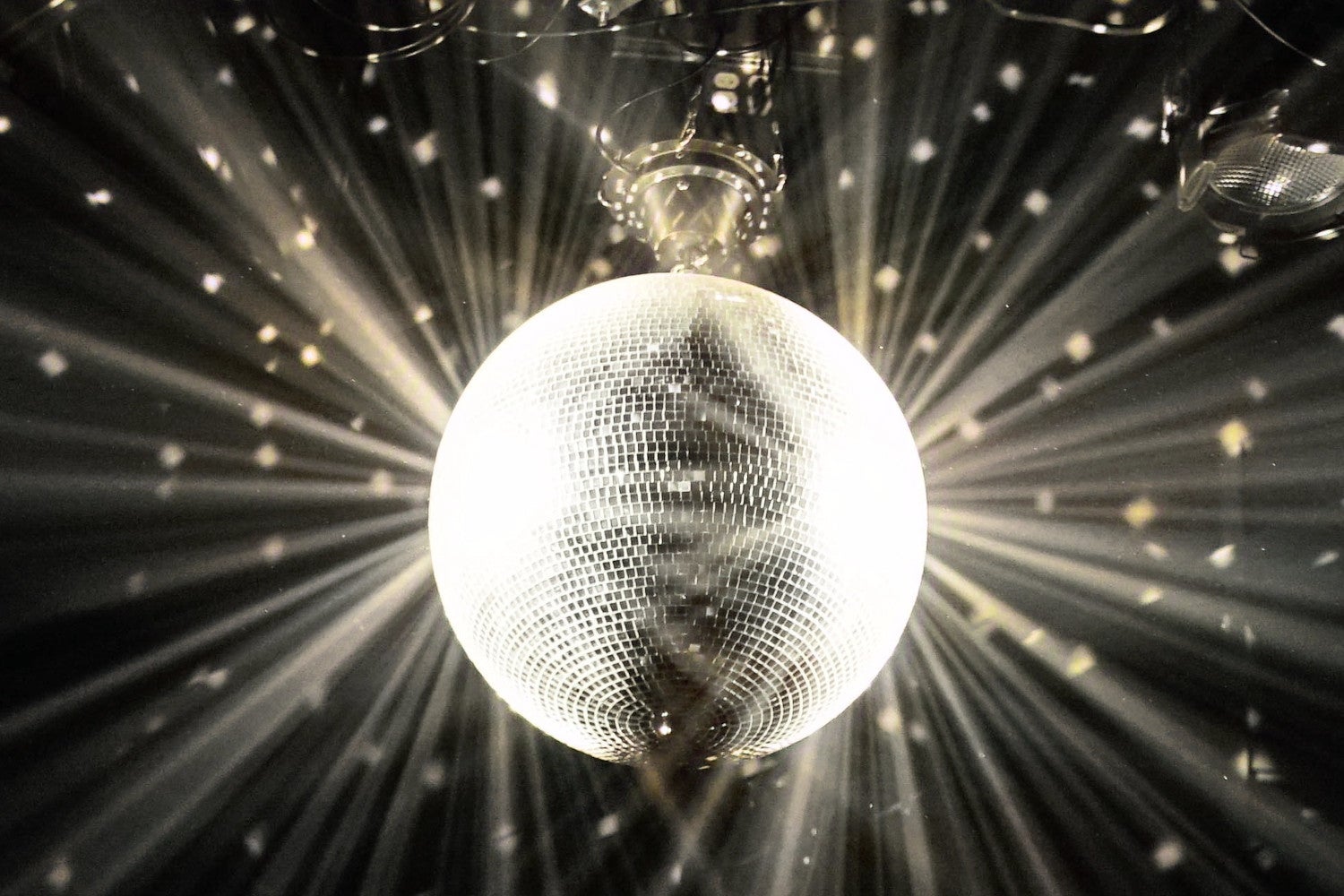
A mirror ball is usually nothing more than a polystyrene or hollow plastic ball covered with hundreds of tiny little square mirrors that are often just 5 or 10 millimetres wide. The mirrors are applied to the surface row-by-row and from the top to the bottom, creating a recognisable linear pattern. On its own, a mirror ball doesn’t do all that much, but the moment you shine any kind of focussed light on one, the light beam is split by the tiny mirrors into multiple tiny light beams and bounced off to be cast as little points of light across the walls, the floors and the ceiling. This creates a star-like effect which is beautiful on its own, but when you add some more atmosphere using a smoke machine, the magic really starts to happen.
» Mirror Balls
» Pin Spotlights

Affordable Nostalgia
In the ‘90s and early ‘00, the disco ball teamed up with a pin spotlight (equipped with a motor and colour wheel if you could get hold of a deluxe model) was a classic fixture in any community centre, club or even local pub. But, the moment that more affordable LED lighting appeared on the scene, the mirror ball was quickly viewed as a relic of a bygone age, as happens with the steady advance of technology. LED lighting was hip. Mirror balls were lame. The same thing happened when CDs became the preferred music format and everyone started selling off their record collections for pennies. Now, in the digital music age, we sorely miss the physical, purely analogue qualities of vinyl and find ourselves out hunting for the vinyl collection we collectively lost. Just like vinyl, the simplicity of the mirror ball inspires nostalgic wonder. We can actually see how a vinyl record works, just like we can immediately understand how and why a mirror ball works – even if it is all just smoke and mirrors. The mirror ball is an immortal classic and, like second hand vinyl, you can also pick one up fairly cheaply.
Considered Lighting
If you want to get the mirror ball effect just right, well considered lighting is the key. First, the ball itself needs to be in the right position which, if you want the effect to cover the entire room, it needs to be suspended in the centre of the room. If that’s not possible, then you could also suspend it above the DJ booth or stage. Once your mirror ball is in the right spot, you need to think about what kind of lighting fixture you can couple it with. Are you just going for white points of light or do you want to change things up and use a light source that can continuously change colour? When it comes to the kind of spotlight you end up going for, it’s worth considering three important things.
#1. On Target?
The projection angle (how wide the light beam is) of your light source needs to be just right. A narrow beam works best because it will illuminate the mirror ball without leaving a lot of stray light spraying out behind the ball, projecting a glow on the wall behind and casting a shadow of the ball itself. Not what you want. This is exactly why, most of the time, you’d use a pin spotlight or ‘pin spot’ which is specifically designed to project a narrow beam of light. Of course, you could use something else like a beam moving head with a really narrow light bundle, then you can use the movement functions for other light show elements and effects.
#2. Got Enough?
The second thing is that you’re likely to need more than one light source pointed at your ball. If your mirror ball is suspended in the centre of a room then, to get the true classic effect, you’ll need to hit it with light from four different positions around the room. If the ball is suspended above the DJ booth or stage, then you can do the same thing, or just light the ball from two frontal positions in a V-shaped formation. This will make sure that all of the little points of light will definitely be reflected out into the space and onto the crowd. Placing a single light source directly in front of a mirror ball can create a fairly messy effect. This is because some of the points of light reflected from the mirror ball will reflect back into the light source itself, making the rays look inconsistent.
#3. Enough Power?
The last thing you need to be aware of is how powerful the light output of your light source is and the effect this will have on the result. If you want to create a club vibe in your bedroom and hang up a mirror ball, you’re not going to need much power from your light to create the desired effect. But if you want to take that same effect into a large live venue and the distance between your mirror ball and light sources is extremely wide, then you need a lot of power to make sure that those little points of light are even visible, especially if you have a whole rig of other types of lighting going on in the same space. In a dark club, for example, you’ll need less power than you would in a grand hall where there’s a lot of low atmospheric lighting to compete with.

Keep it Spinning
To get the most magical effect out of your mirror ball and create the dynamic illusion of moving stars, you need to suspend your mirror ball from a purpose-designed mirror ball motor. Mirror ball motors are fairly simple gadgets to work with and consist of just one unit: some kind of drive system that slowly rotates a hook or similar feature that bears the load of the mirror ball. With some motor models, the rotation speed (RPM or rotations per minute) can be adjusted, and the kind of motor you use will depend on the rotation speed, the size of the ball and the kind of effect you’re going for. If you have a really large ball and a greater initial rotation speed, then the ball will appear to revolve faster. The most common speed is between 1 and 3 rotations per minute. For a big mirror ball, a motor that rotates at 1 RPM is usually enough.

Extra Safety
Because the mounting point of most mirror ball motors is often a bit higher than the height you probably want your mirror ball to be suspended at, you can use a chain to create more length between the motor and ball. Just make sure that everything is well secured using the right tools, like carabiner hooks with a screw lock. A lot of larger mirror balls and motors designed for larger models come fitted with two mounting points: one for suspending the assembly and one for securing a safety cable. The safety cable will prevent the ball from falling to the ground if the first mount fails.
Before we’re all done, one final thing: if the space allows, always make sure that the ball is suspended high enough about the crowd. This will make sure that the little points of light are dispersed as far as possible throughout the space and won’t blind the eyes of any people on the dance floor.
See also
» Mirror Balls
» Pin Spotlights
» Mirror Ball Motors
» Safety Cables
» All Lighting & Decoration
» How to Tell the Light Tech What You Want
» Create the Right Wedding Party Vibe with the Right Lighting
» Stage Decor Design – 4 Tips From a Professional
» Party Lighting: Do’s and Don’ts
» Smoke Machines: Are They Dangerous?
» Stage Lighting: what’s the right lighting for you?
» The Ideal DJ Lighting Setup
» What’s The Difference Between DMX and XLR Cables?
» Why You Should Be Using Gaffer Tape Instead of Duct Tape
 Stage Lighting: what’s the right lighting for you?
 Want to turn LPs into MP3s? Here’s How to Digitise Your Vinyl
 Create the Right Wedding Party Vibe with the Right Lighting
 How to Breathe: For Vocalists & Musicians
 Playing Keys in a Band: What You Need to Know
 Setting Up the Band with a PA System? Here’s What You Need to Know