
How many keys do you need? From mini controller to full-size keyboard
Published on Wednesday 14 October 2026
How many keys you need doesn’t depend on how good you are, but on what you want to do with them. A producer recording basslines will get by fine with a couple of octaves, whereas someone learning the piano will hit a wall within a few months. In between lies a whole range of options, and each size suits its own kind of musician.
How the piano ended up at full size
A modern piano has 88 keys, spanning just over seven octaves from low to high. That isn’t a law of nature. Over time, the keyboard kept getting wider because composers wanted more room, and by the end of the nineteenth century this had become the standard everyone worked to.
That’s also the honest answer to whether you’ll ever need 88: if you want to play piano repertoire, then eventually yes. I say eventually, because the vast majority of piano music really doesn’t need seven octaves. And if you’re going to play the keyboard, for example, you won’t need it at all, as you probably don’t want to be a pianist in the classical sense.
» View all keyboard instruments
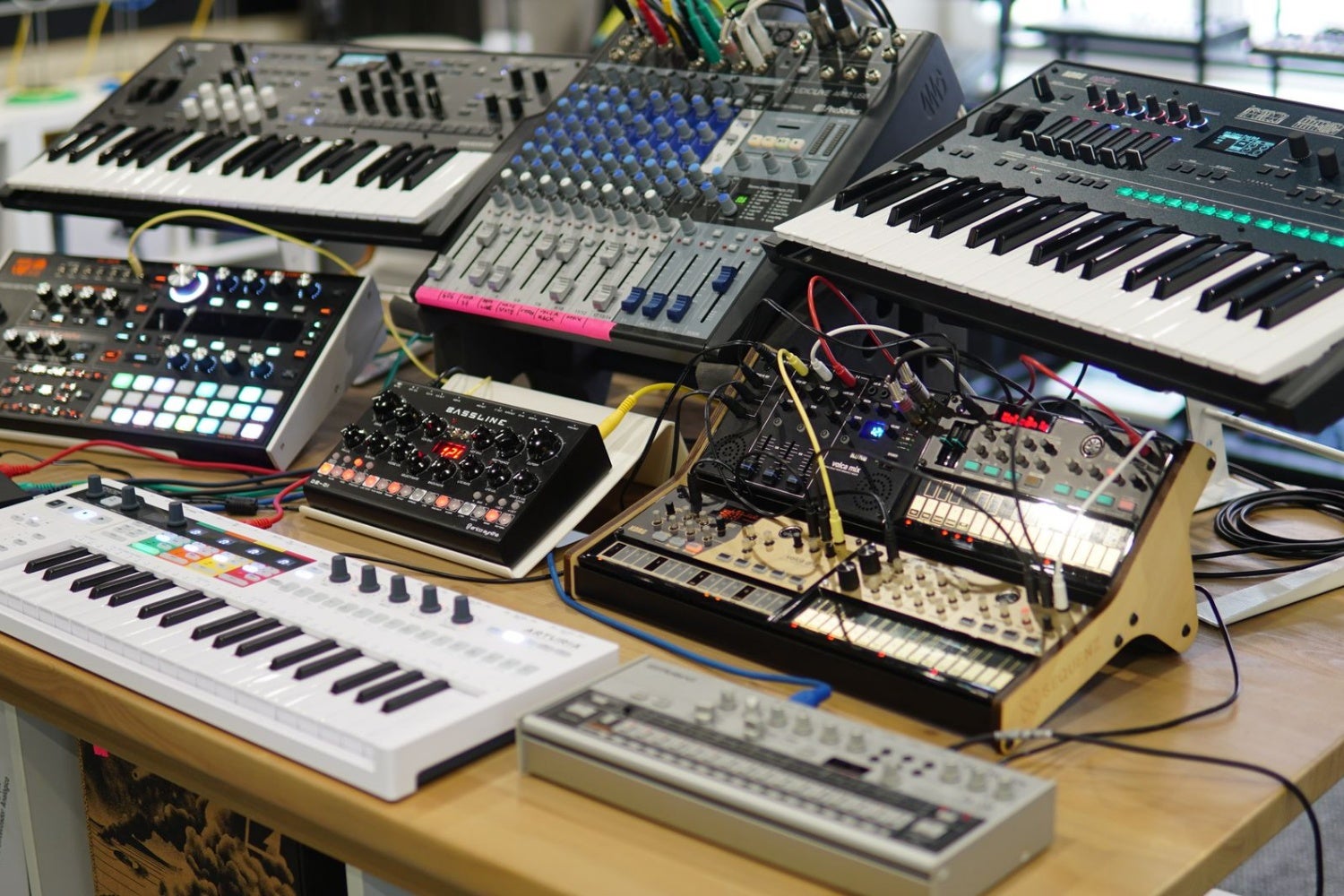
The white MIDI keyboard in the middle is one of those typical compact little models that producers use to control the sounds on their computer and external synthesisers
25 to 37 keys – the smallest controllers: melodies, not piano playing
The very smallest keyboards, with 25 to 37 keys, are designed for producers who, for example, play in a melody, drum pattern or bassline with one hand while the other rests on the mouse. Two octaves is often plenty for that. At most you’ll play one-handed chords, and if you need to go higher or lower, you simply press the octave button. You’ll hardly ever play with both hands at this size.
Some of these controllers also have mini keys: narrower keys that let the device fit on a corner of your desk or in your rucksack. Handy, but if you want to learn to play, don’t start out on one. Your fingers will learn distances that don’t match a real piano, a full-size keyboard or a standard synthesiser.
For what it is – a ‘sketchpad’ instrument next to your laptop – I think one of these little ones is fantastic. But as soon as you want to start playing with both hands, you’ll quickly realise you need something bigger.
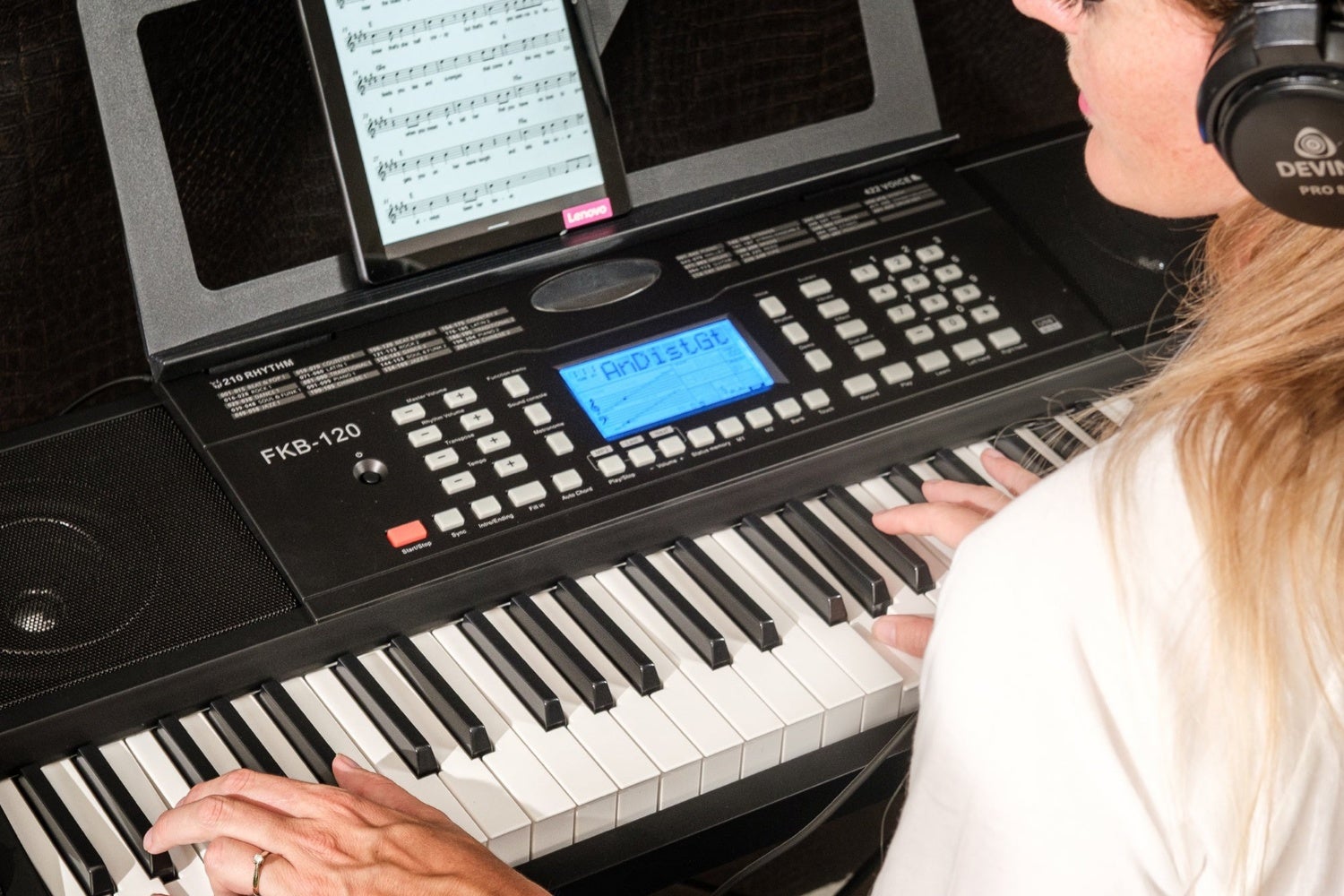
Most keyboards, just like this model, have 61 keys
The middle ground: learning keyboard and pop keys
From 49 keys upwards you can really get going with both hands: usually chords on the left, melody on the right.
With 61 keys, so five octaves, you’re at the size of the standard all-in-one keyboard (including the familiar auto-accompaniment) and many a synthesiser. That’s also the range that most keyboard parts in pop music fall within. A ‘pad’, an organ part, a synth lead, a little piano part under a chorus: it all fits without you having to touch any buttons while you play.
The difference between 49 and 61 comes down to exactly that: how often you reach for the octave buttons. These let you shift the entire keyboard an octave lower or higher, so you can switch between, say, a bass and a flute. With the four octaves of a 49-key keyboard, you’ll be doing that a lot in practice; with five, a good deal less. It’s like cooking on a worktop that’s too small: you’ll manage, but you’re constantly shuffling pans around instead of actually cooking.
What you will run into at this size: fully weighted keys, with the heavy feel of a real piano keyboard, are rarely found on 61 keys (or fewer). You’ll almost always get the familiar light ‘synth’ keys or, at most, a semi-weighted keyboard, which sits somewhere in between. For keyboard and synth playing, that’s exactly what you want, but for anyone who wants to learn the piano, it’s a serious limitation.
» View all keyboards
» View all synthesisers
» What’s the difference between a keyboard and a digital piano?
» What’s the difference between a keyboard and a synthesiser?
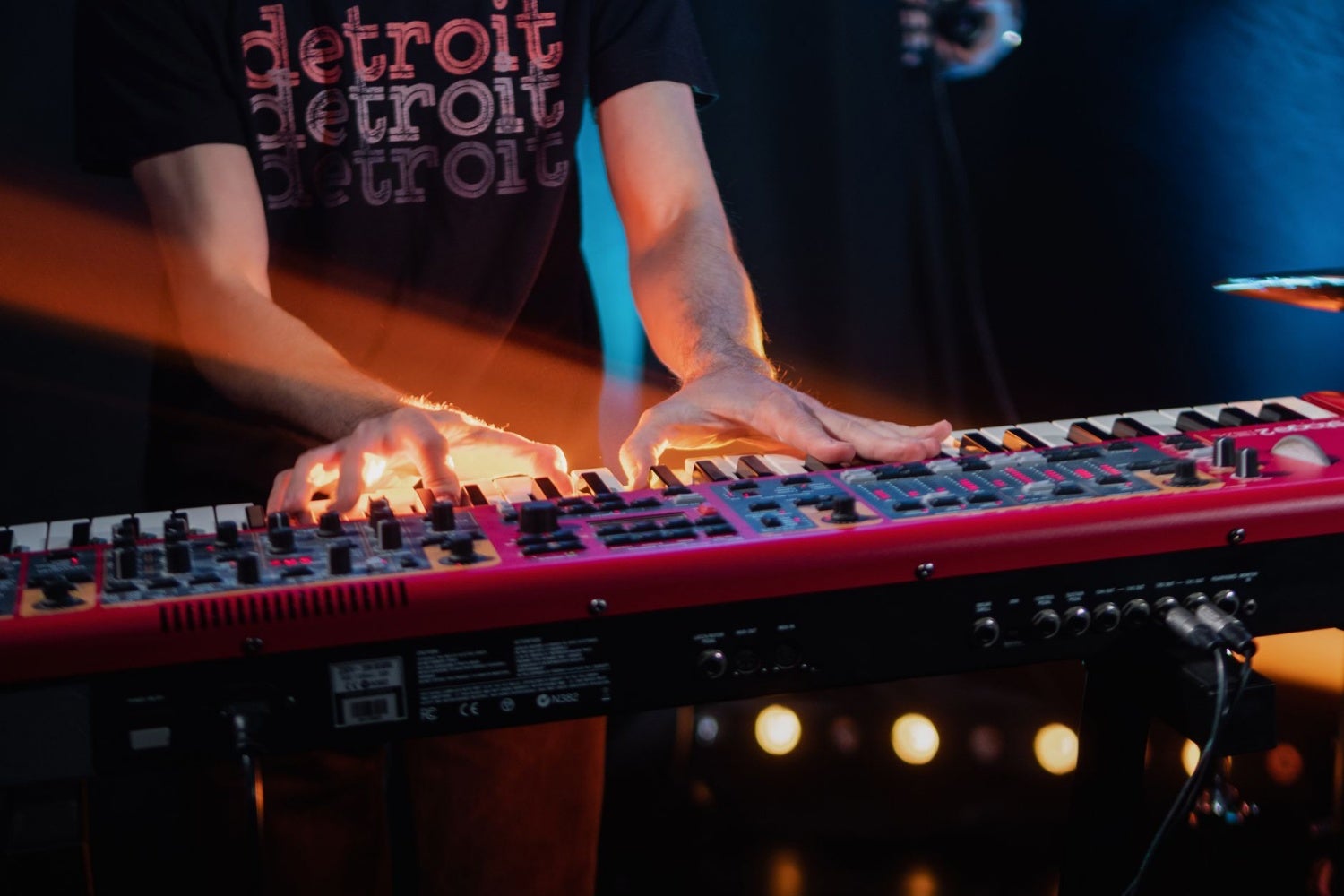
You can instantly recognise this as a Nord stage piano by its colour. Plenty of keyboard players opt for a more compact model like this with 73 keys (but Nord pianos are also available with 88 keys).
The compromise for live and studio
With 73 or 76 keys, you’re at the size for the keyboard player who needs a decent range, but for whom 88 keys are just that bit too unwieldy in the studio or in the car/van. I spent a while carting one of these around in my own car, and it really makes a difference: less lugging, less hunting for a corner on stage, and it fits on any back seat. For anyone who mainly plays in a band or writes songs, this is the sweet spot where price and piano feel meet.
So what do you get? You lose roughly half an octave at the bottom and half an octave at the top, and in most pop and band music you’ll barely notice. On top of that, there are fully fledged digital pianos and plenty of stage pianos with this smaller range. You use that extra octave so rarely, even in proper piano music, that even as a professional you won’t have much to complain about.
One more word on that piano feel, though: not every 73/76-key model has the weighted or hammer-action keys of a piano. They might still be keyboard/synth or semi-weighted keys. That needn’t be a problem, because needing a large range for your purposes doesn’t automatically make you a typical pianist. Perhaps you arrange orchestral music…
» View all stage pianos
» Playing keys in a band – What you need to know
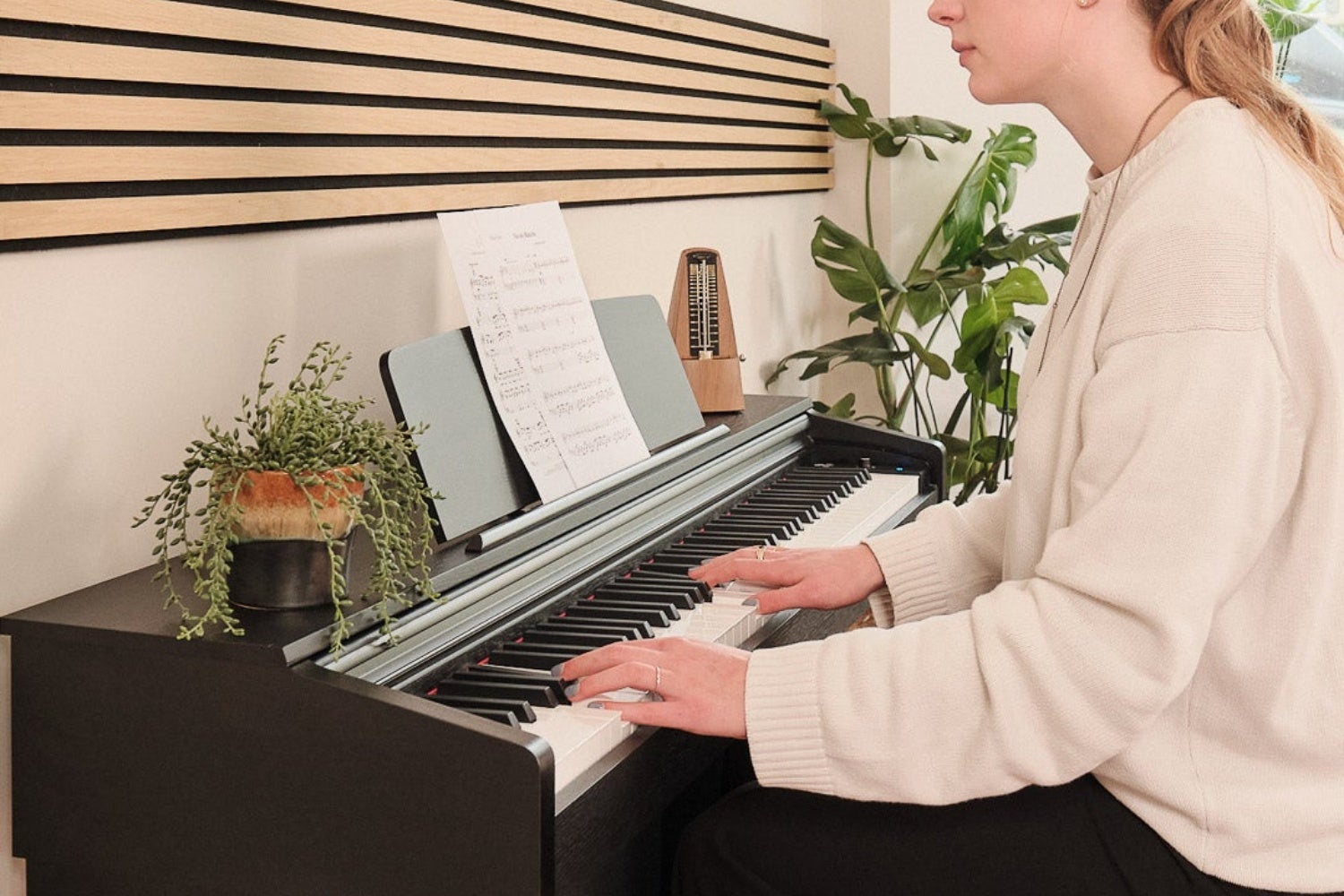
A typical digital piano for the home, with a full 88-key piano keyboard.
The full-size keyboard: for those getting serious about piano
Anyone who wants to learn the piano and sticks with it seriously will eventually end up with 88 keys. Not because you’ll use the whole keyboard in the first few months, because you won’t, not even a year in. The reason is that a moment will come when you do need those notes, even if only very occasionally. Classical piano books in particular have a habit of venturing to the far ends of the keyboard.
So should a beginner buy 88 keys straight away? No, you can easily start with fewer and enjoy it for months. The only question is whether you’ll be buying again in two years’ time. Many people who stick with it find that their smaller instrument eventually becomes too cramped and end up getting the bigger one anyway. Buying twice costs more than buying the right one once, and 88 keys is usually the pricier option to begin with.
That said: the choice is usually made for you, as regular digital pianos with fewer than 88 keys are very much in the minority.
» View all piano and keyboard starter sets
» Try the Interactive Digital Piano Selection Guide
» View all digital pianos




No comments yet...