
Musician
-

Put simply, the dynamics refer to the volume range of any given piece of music, so the difference between the loudest and softest parts along with everything in between. Songs, albums and even entire shows can greatly benefit from enhanced dynamics, yet many bands and artists sadly pass up on the opportunity. Since they’re definitely missing out, here are eight tips that can help enhance the dynamics of your music.
Comments Off on How To Enhance The Dynamics Of Your Music | in: Musician -

The shorter the distance between the source and the microphone, the more low frequencies are registered at the cost of high frequencies. This is what’s known as the proximity effect, and it applies to a lot of microphones. In practice, this usually means that the closer you close-mike your voice or instrument, the fuller it’ll sound. Read on and learn how to take advantage of it.
Comments Off on Microphones and the Proximity Effect | in: Live Sound, Microphones, Musician, Singer, Studio & Recording -

It’s a classic issue in the life of drummers. You hit the smallest, highest pitched tom and your snare makes a buzzing sound in response. Even when you try to dampen the snare with a bit of tape, a slip of paper or card, or even a tea towel, the snare wires still vibrate when you don’t want them to. So, how does this even happen and how can it be solved?
-

Since we get so many questions about it, it’s about time we tackle an age-old debate in drum-land with a dedicated blog about bass drum holes. The question is: should your resonant head have one and why (not)? Allow me to explain!
-
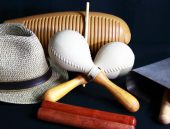
The world of percussion is home to a near-infinite range of unique sounds, yet many pop and rock musicians seem to pay it no mind. Maybe it’s because they don’t know their way around percussion gear, or perhaps they simply don’t know how to put any to good use. Either way, since rock and pop music can benefit greatly from percussion in terms of rhythm, melody and even harmony, here’s a list of seven solid percussion instruments along with a quick rundown and examples of well-known tunes they feature in.
-

Though it is often referred to as the guitar’s baby cousin, the ukulele has many differences that make it a singular and special instrument. From its unique history and tone to the way it has penetrated popular culture, guest blogger Matthew Quilliam discusses how the ukulele can so easily stand on its own merits…
-

As soon as you start working with cables, you run the risk of cooking up cable spaghetti. To help you organise your set-up, we’ve listed five cable management tips. Dive in before you tie yourself up in knots.
Comments Off on 5 Tips for Efficient Cable Management | in: Cables, Live Sound, Miscellaneous, Musician -

If you’ve already checked out our Bass Drum Pedal Buyer’s Guide and want to learn even more about kick drum pedals, then this in-depth blog is the next logical step. Once you know exactly what the beater, footboard, spring tension, chain-drive and cam do, adjusting or upgrading your kick pedal will be much easier.
-

Just like vocals, the cello can seamlessly move from sweet-and-elegant to dark-and-raw, and while it’s a staple of classical music, this popular bowed string instrument can just as easily work its magic in styles like pop, rock and even metal. Read on and get to know it a little better!
Comments Off on A Closer Look At The Cello | in: Musician -

If you’ve just kitted yourself out with a musical instrument or any other gear marked with ‘P65’ or ‘Proposition 65’, often with the added warning “This product may contain / can expose you to chemicals which are known to the State of California to cause cancer and birth defects or other reproductive harm,” is it this something you actually need to worry about? In short: no. But to find out what the warning actually means and why you don’t need to panic, read on!
2 responses | in: Musician -

In previous blogs on chord theory, we covered all the most common chords so, to make the series complete, this edition will dive into a few more special, out-there chords, including minor-majors (mΔ), augmented sevenths (+7) and diminished triads with major sevenths (oΔ). These chords are often used as transitions, so they’re definitely worth knowing about, even if they are extremely rare.
-
What’s great about drumming is that you can hone your skills without having access to an actual drum kit – something that doesn’t fly if you’re a violinist, trumpeter or guitarist. In this blog, I’ll provide an overview of all of the drumming-without-a-drum-kit options out there, ranging from air drums, tabletop kits and practice pads to fruit crates, travel cajons and your own body.