
Playing the piano with both hands at once: how to train hand independence
Published on Friday 9 October 2026
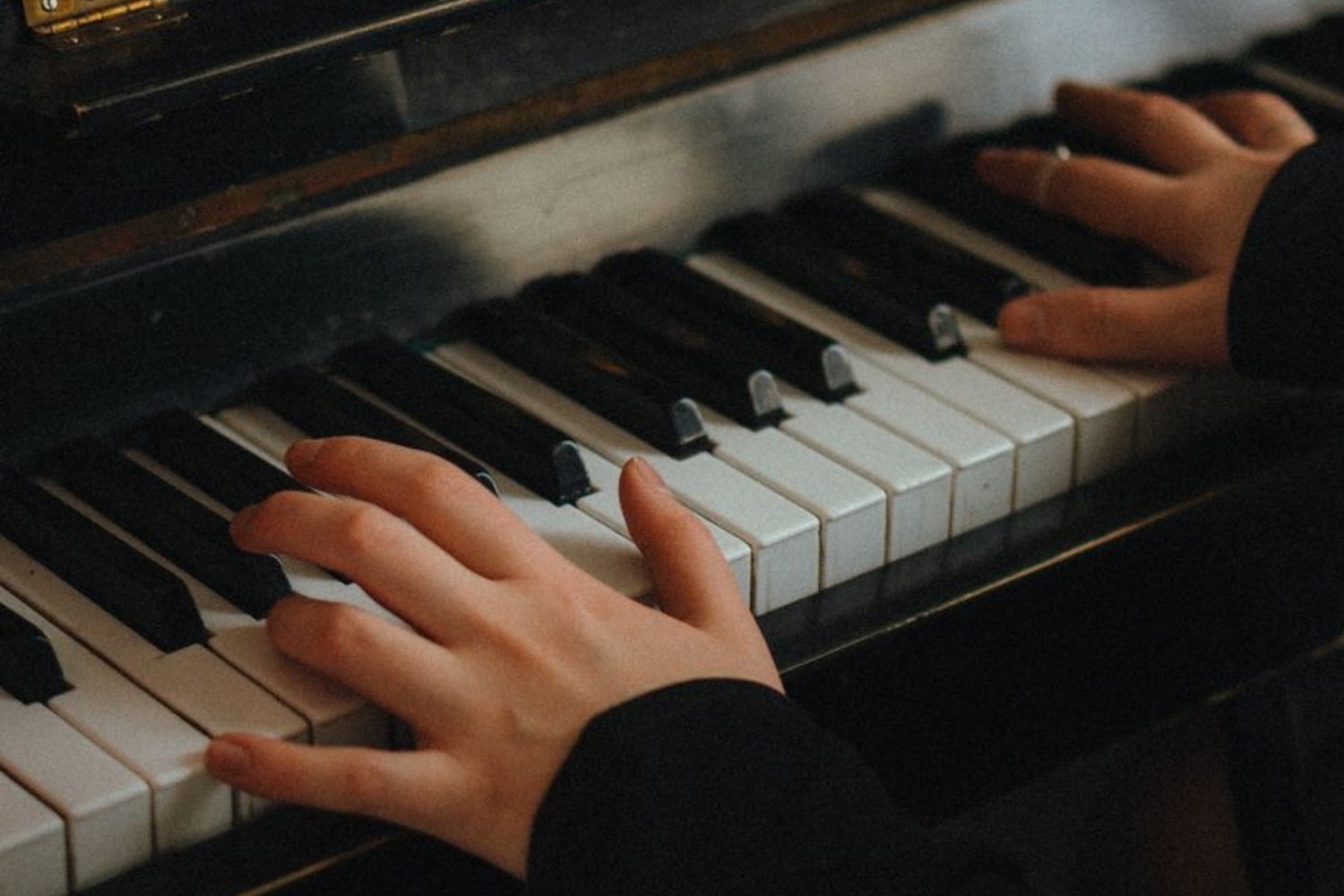
The right hand on its own goes fine. Now the left-hand part: also fine. Great, time to put them together. And that’s the moment everything gets tangled up. This isn’t a personal failing; it’s the stumbling block for almost every beginner pianist. Playing with two hands at once is a skill you have to train separately, and you do that by making the problem smaller and smaller until it works. Time to start cutting.
Six bars that felt like a maths problem
I was nine years old when I started piano lessons. We worked from a wonderfully old-fashioned book. I dutifully played the simple scales, little melodies and songs, written alternately for the right and left hand. The next step was a melody that started in the left hand and at some point – once it got high enough – was taken over by the right hand. That was supposedly difficult, but it was actually easy. And then came the moment when the two hands had to play different things at the same time. It was only six bars, but it felt as if I had to solve a maths problem.
As my body refused to cooperate time and time again, I thought: “How am I ever going to manage this?” The answer eventually turned out to be: keep going. In the end it’s – sorry for the cliché – just like learning to ride a bike: suddenly the balance is there and it clicks all by itself. Then again, that’s only the beginning. Just as you’re not a BMX stunt rider after your first hundred metres on a bike, there are still plenty of coordination challenges waiting for you after that first successful left+right session at the piano. Coordination is hard.
» Learning to play the piano or keyboard – Everything for the keyboard player
» View all piano books
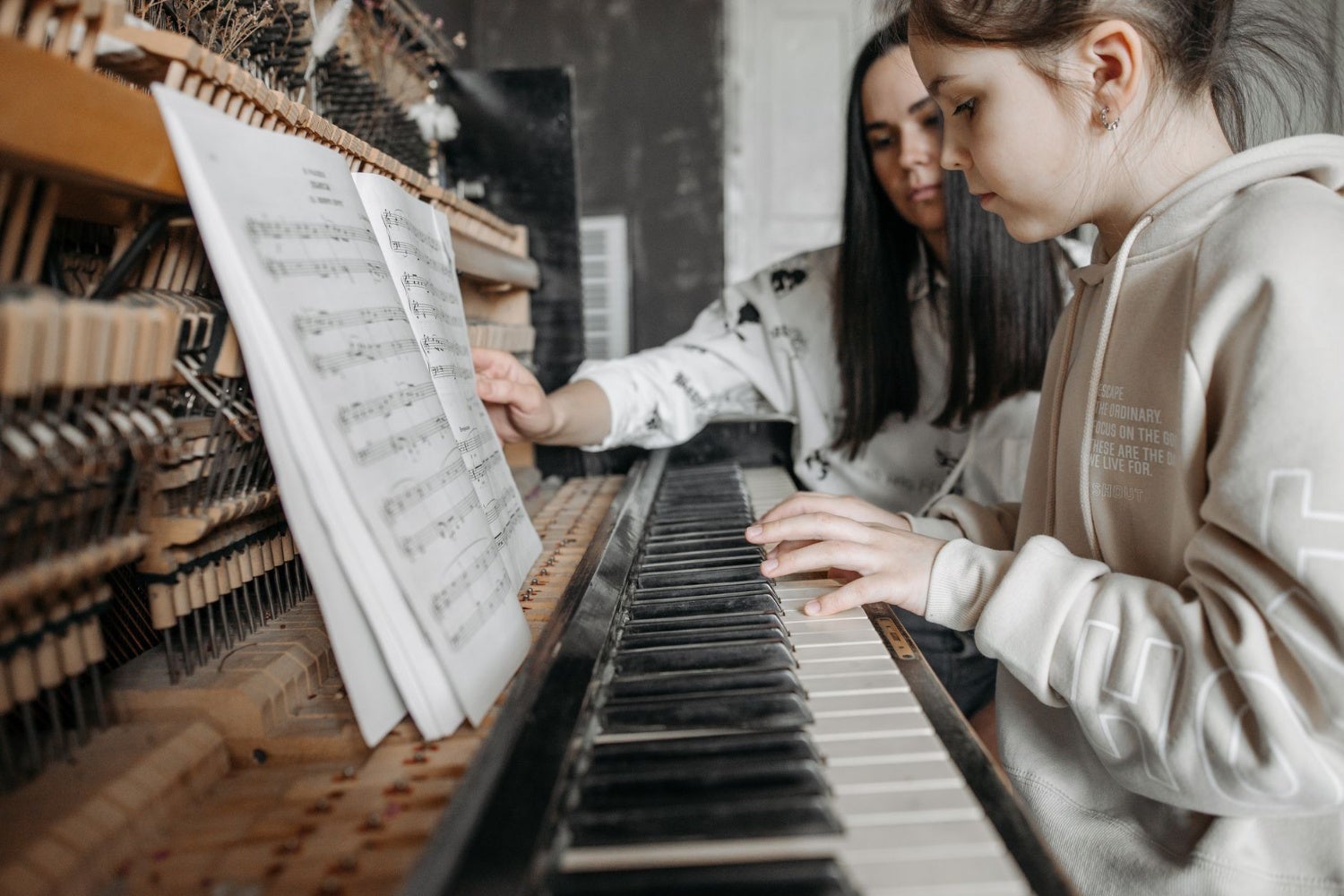
Why playing with both hands suddenly falls apart
Your hands aren’t the problem. Think back to your third driving lesson: pressing the clutch works, accelerating works, mirrors and indicator work. But as soon as the instructor asks you to do it all at once, the car hiccups three times and stalls. Nobody concludes that you have a movement disorder. You’ve simply never done that specific combination before. The piano is exactly the same.
You can type while eating a sandwich. So there’s nothing wrong with your everyday coordination. Two hands on a keyboard is a separate skill, unrelated to how dexterous you are otherwise. This skill is simply missing right now, so the only reason you can’t do it yet is that you haven’t practised it yet. That may sound like a platitude, but it’s also liberating: nothing is broken.
You can see that it really is a matter of training in people who have been doing it for years. In a study where participants tapped as fast as possible with one hand, the other hand of non-pianists secretly moved along a little. In experienced pianists, that other hand simply did nothing. Years of keyboard experience seem to teach your brain to keep one hand still while the other is working. You start on that today.
Hands separately, but smartly
First, each hand on its own. Why? Because your conscious brain can only properly keep track of one thing at a time. Once the left hand is in your fingers, your mind only needs to keep half an eye on it and has room to focus on the right. This isn’t a detour, it’s the only way. A word of warning, though: don’t learn the whole piece with your left hand and only then the whole piece with your right. Work phrase by phrase, and put the hands together phrase by phrase.
Also make sure the fingering is fixed and that you apply it flawlessly before putting your hands together. Every time you randomly use a different finger, you create yet another new situation for your brain to deal with, while we’re trying to keep that workload as small as possible. Method books and a lot of sheet music include the fingering. And if you’re stubborn enough to deviate from it, at least be consistent.
If you’re right-handed, give your left hand extra turns. For right-handers, the left hand is naturally slower and clumsier, and playing together only runs smoothly when the difference between your hands is small. Motor skill experiments have shown that pianists perform noticeably better with their left hand than non-pianists, while there’s hardly any difference on the right. So the weaker sibling does catch up, but only if you train it deliberately.
» Playing the piano: correct posture and hand position
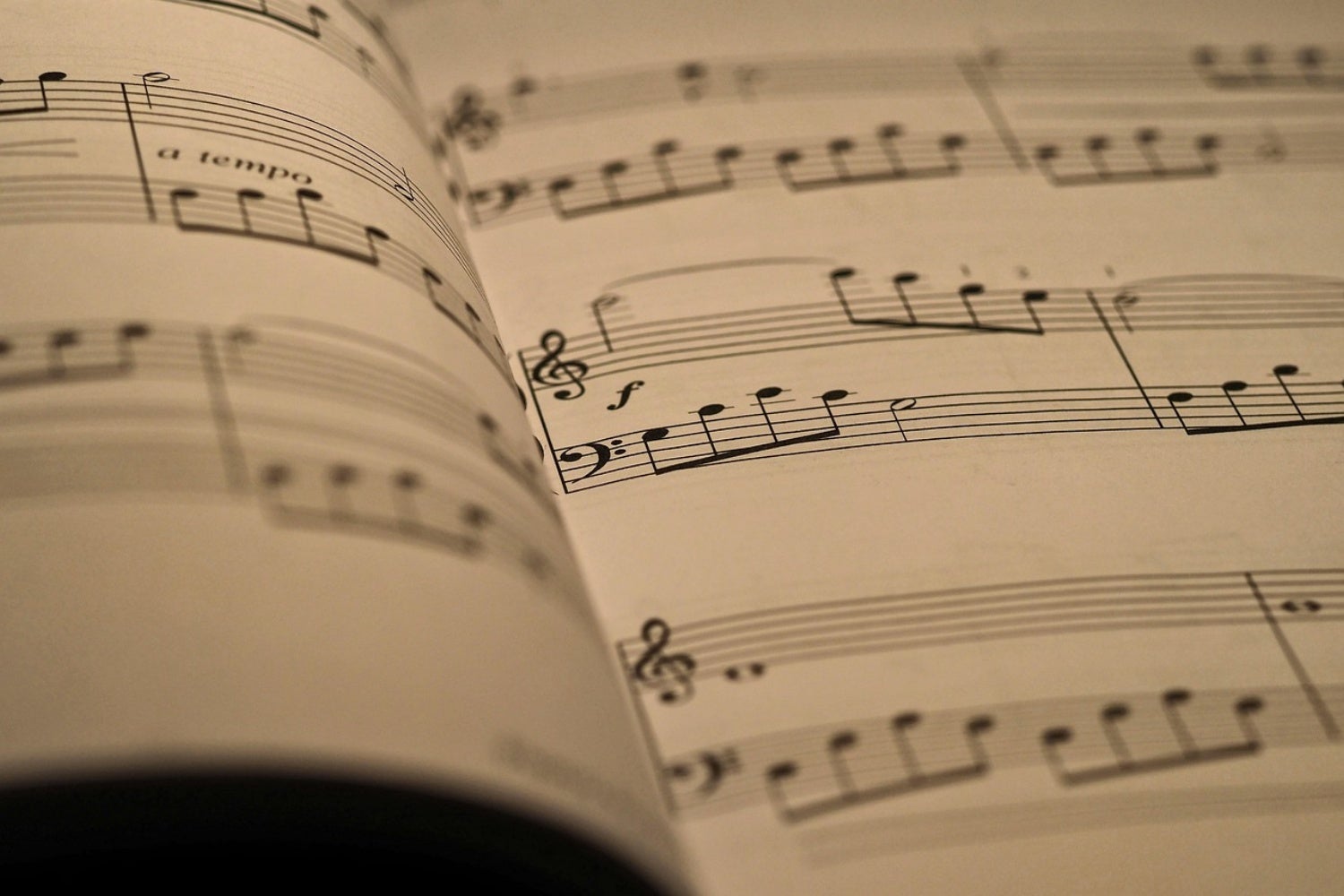
Simplify: cut it down until it works
Trying to play a whole page with both hands straight away – there’s an expression for that: biting off more than you can chew. Take one bar. Two, if you’re lucky. Play it several times in a row at a tempo so slow that nothing can go wrong. A faster tempo with mistakes means you end up learning those mistakes, and they’re hard to get rid of later. I’ll say more about playing slowly in a moment.
A quick aside: every now and then you should forget about that piece and just do some exercises. For example, play the first five notes of C major with both hands, up and down, in the same direction. Then in contrary motion: both thumbs on middle C, then outwards from there and back again. Boring? Ugly? Doesn’t matter. You’re now training pure coordination, without Bach or Einaudi distracting you.
You can also simplify the piece itself. Once you’ve practised both hands separately, you don’t have to put them fully together straight away. For example, play only the first note of each bar with your left hand while your right hand plays the full part. And then the other way round.
» Classical piano for beginners – 6 well-known compositions
Slow is the new fast
Slower. No, slower. So slow that it’s no longer music but a series of separate decisions: this finger, that key, now together. It feels ridiculous, and it’s exactly what your brain needs to link your hands together rather than letting them trip over each other – and it was also the only way I – nine years old, with that old-fashioned method book – eventually made it through those six bars. Speed comes by itself once the connection is there. It doesn’t work the other way round.
Oh, and although a metronome certainly has its uses, I would not use one here. Coordinating your hands is hard enough already, and instead of a helpful tool, a metronome suddenly becomes an irritating tyrant: “STAY – IN – THIS – TEM – PO!” Why would you put yourself through that? Look, it’s good not to keep switching between walking and running while learning a piece, but you don’t need the relentless precision of a metronome for that.
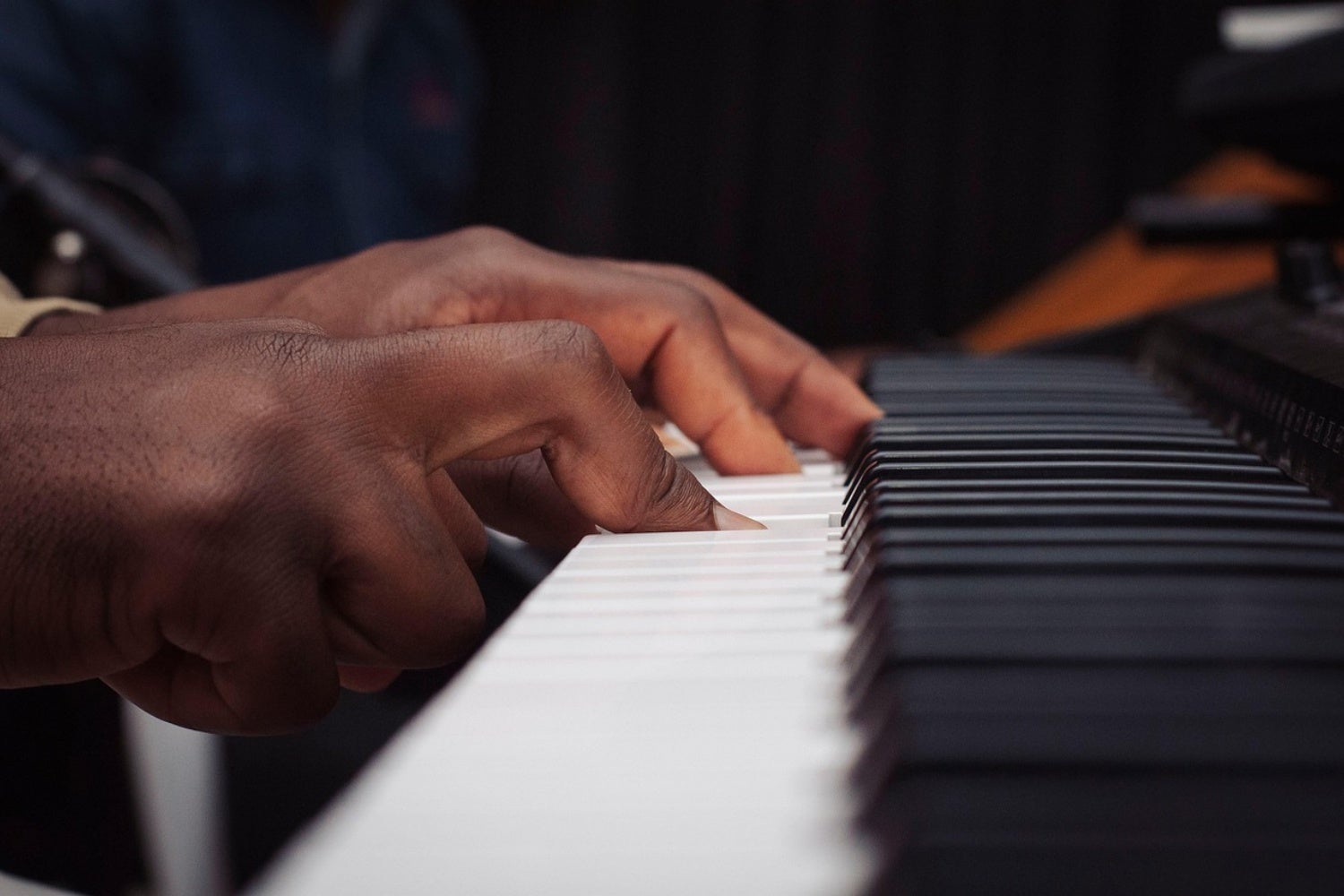
Practising without keys
Step away from the piano now and then. Practise on a table, on your lap, on the train. Tap the left-hand rhythm with your left hand and the right-hand rhythm with your right. Coordination lives first and foremost in your hands, so you can practise anywhere. Without the notes, only the rhythm remains, and that’s often exactly where things go wrong.
Repeat, vary and above all keep it short
There’s no way around repetition. The same passage today, tomorrow and the day after, until your hands do it without you needing to be there. Think in weeks rather than days. Five minutes a day beats one hour on a Sunday: short and frequent keeps things fresh, while an hour of slogging away mostly gives you an hour of frustration.
When an exercise gets boring, you’re ready to challenge your body. Swap hands: what the left hand did, the right hand now does. Reverse the direction. Play the left hand loud and the right hand soft, then the other way round. You’re always looking for that edge where it only just works. Too easy is a waste of time, too hard is frustrating, and in between is where you learn.
And what if it still falls apart when you play hands together? Then you’re not back to square one. The section was just too big or the tempo too high. Cut it smaller, play slower, try again. That’s the whole recipe. Not glamorous, but exactly how every pianist has ever learned it.

Two hands, two characters: the ultimate goal of independence
Even when both hands play exactly the same melody, they’re not doing the same thing in an experienced pianist. Researchers had experts and amateurs play the same melody in unison: both hands playing the same notes at the same moment. In the experts, timing and touch strength turned out to be controlled separately for each hand, much less so in the amateurs. So independence isn’t just about combining different notes and rhythms, but also about varying expression, per hand and per finger.
Sounds like another universe. Nobody expects this from you after three months of lessons. The pianists in the study also once had two hands that got in each other’s way, and they solved that with the very exercises you now have at your fingertips. Every time you go back to simplifying and slowing down, you give your brain another chance to learn. All those little lessons eventually add up to a level of control that seems impossible right now.





No comments yet...