
Live Sound
-
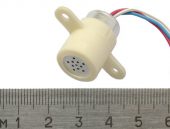
If you’ve been flipping through our range of microphones, you’ve probably come across the terms ‘electret’ and ‘true condenser’. But what’s the difference? And are ‘real’ condenser microphones always better than electret microphones, like the name suggests? In this blog, we’ll explain it all.
-

As soon as you start working with cables, you run the risk of cooking up cable spaghetti. To help you organise your set-up, we’ve listed five cable management tips. Dive in before you tie yourself up in knots.
Comments Off on 5 Tips for Efficient Cable Management | in: Cables, Live Sound, Miscellaneous, Musician -

In the world of live shows, the front-of-house sound engineer controls one of the key ingredients to a successful gig: the PA system. Since keeping an eye on the sound, the band and the crowd at the same time is no easy task, we interviewed one of the Netherlands’ best sound-techs to ask him how it’s done and what it takes.
Comments Off on Front-of-House Mixing: Here’s How a Sound Tech Does It | in: Live Sound -

Great stage sound is essential if you want to put on a great live performance but can be difficult to achieve. Luckily, the tools that can help have already been invented: floor monitors and in-ear monitors. That said, these bits of kit also cause the occasional issue. In practice, balance and discipline are what makes or breaks great live sound – monitoring actually only comes in third place.
Comments Off on Stage Monitoring: Some Do’s and Don’ts | in: Live Sound -

If your band is busy laying roots across the country, playing every gig it can, whether in a fully set up venue or grubby backstreet pub, the idea of kitting yourselves out with a good PA system has probably come up already. But as soon as you’ve decided to take the leap, you’re faced with a whole new set of questions. Do you need active or passive speakers? Do you just need a little vocal setup or a complete PA system? What do you need to look for in your perfect mixer, your monitors, your microphones…? And so on. Not to worry, in this blog, we will lend a generous helping hand and set you up with the knowledge you need to make all the right decisions.
-

Unfortunately, there comes a time when everything breaks, and the same is definitely true of music gear, whether it’s speakers, valve amplifiers, or your electric guitar or bass. In the worst case, you’ll need to get it fixed by a professional, but there are some smaller, more simple repairs that you can actually carry out yourself. With a voltmeter, a soldering iron and a little solder on your side, you can get more done than you might think.
-

There comes a time in every musician’s life when they are forced to confront a mixer for the first time. To the un-schooled user, these chunks of equipment can seem intimidating and complex, and while mixers range from the super-compact to the desk-sized gigantic, all of them are based on the same set of principles and will offer the same basic set of functions and connection options. In this blog, we offer a step-by-step explanation of the ins and outs of mixers.
-

Most people never even think about vocal microphone hygiene, which is okay as long as you’re the only one using the mike. If not, it’s important that you clean your vocal microphone after use to prevent one singer from passing their germs on to the next. In this humble blog, I’ll explain how you can easily clean a microphone yourself.
Comments Off on How to Clean a Microphone | in: Live Sound, Microphones, Musician, Singer, Studio & Recording -
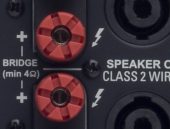
2 Ohms; minimum load 4Ω; 8-kOhm; 16Ω…when you enter the world of audio amplification, there’s no way around terms like these. They’re often found on the backs of speakers, guitar cabinets and amplifiers, so in this blog, I’ll try to clear up the role of impedance (resistance) and explain what the numbers that go with it actually mean.
26 responses | in: Live Sound -

Gaffer tape or duct tape? Line up a few rolls of each and you won’t be able to tell the difference but as soon as you get them in your hands, you’ll immediately know which is which. This isn’t much of a surprise since they are in fact completely different things. So, while duct tape is known for being able to fix any of the world’s problems, why is it that lighting and sound technicians turn to gaffer tape instead? We explain all in this little slip of a blog!
-
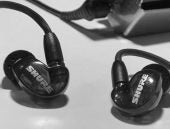
Guest-blogger Niels is here to tell you why in-ear monitoring (IEM) isn’t only great for gigs, but rehearsals! Together with the other six members of his band, Niels decided to get in-ear monitors for live performances, but they soon found out that there are also various benefits to using the system in their rehearsal space: much less noise and the ability to actually hear what you’re working on.
-
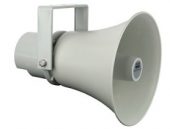
When you want to set up a small army of PA speakers in multiple rooms throughout a department store, shopping centre, restaurant, school or business, a 100-Volt system is a fitting solution. Since multiple speakers are connected to the same cable in parallel, it’s perfect for covering long distances combined with relatively low-powered speakers. As such, 100V systems are also used at sporting events, and in this blog, Bax Music product specialist, Bob is here to explain the basics and what to look out for when buying and setting up a 100V system.
Comments Off on The Basics of 100 Volt Systems | in: Live Sound