
Live Sound
-
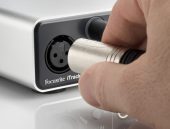
So, you’ve bought a new microphone only to find out that it won’t work unless you supply it with phantom power. Condenser microphones in particular often require this. Fortunately, most mixers, audio interfaces and recorders have a built-in phantom power supply, the control for which is indicated by ‘Phantom’, ‘P48’ or ‘48V’. In this blog, I’ll tell you what to look out for when you want to use phantom power.
-
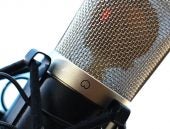
Whether you’re browsing the internet for a vocal microphone for the stage or a condenser for your studio, it won’t be long before you’ll run into the term ‘pickup pattern’, also referred to as ‘polar pattern’. You’re also likely to bump into terms like ‘cardioid’ or ‘omnidirectional’. In this blog, I’ll present you with the pickup pattern basics, include a few field examples, and tell you what you need to know when you’re looking to, ahem, pick up a new microphone.
-

Your local drive-in DJ, the next-door neighbour or even your best friend bragging about their new sound system might sound familiar to you. There are plenty of times when I’ve heard them say: “My new speakers are off the charts man, they’ve got 1,500 Watts of power!” This goes to show that a lot of people assume that more power means more volume, but really, it’s not that simple.
17 responses | in: Live Sound -
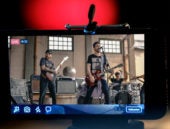
Sometimes, something happens that means you can’t play any shows for a little while. This not only makes the life of a musician or band a little bit boring, it also messes with that delicate relationship you’ve built with your devoted fans. To keep the love alive, you could easily live-stream a gig from the comfort of your living room or rehearsal space and you can even do it with great sound quality!
-

Singers forgetting the next lyric, drummers who struggle to stay in time, guitarists who keep playing that same bum note and buzzing audio gear … For all musicians, sound technicians and producers, these problems might be all too familiar.
-
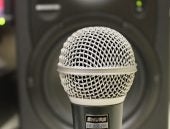
So, you want to amplify your voice, but all you’ve got is a microphone, a cable and a speaker. Can it be done, you ask? While it certainly can, you’re going to need a suitable microphone and speaker, although some cases leave a little room for a creative solution. As always, read on to learn more!
-
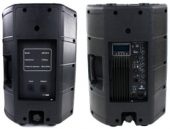
This blog deals with one of the most frequently asked questions the specialists at Bax Music receive: What exactly is the difference between active and passive speakers? And more importantly, what should I look for when I want to pick up either of them?
2 responses | in: Live Sound -

While setting up a bunch of audio gear for a venue or studio, you’re going to come across balanced and unbalanced cables. But, what exactly is the difference between these so-called symmetrical and a-symmetrical connections? What kind of plugs do you need to use and are balanced cables pretty much the same as stereo-cables? All of these nagging questions shall be answered in the following blog.
-
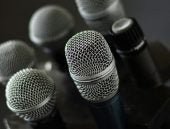
A microphone is one of those devices that you speak into and then it magically enlarges and reproduces your voice, right? Well, let’s just say that that’s a rather blunt way of putting it. One thing that all microphones have in common is that they take sound and turn it into electricity. Dynamic microphones and condenser microphones each do this in a completely and noticeably different way, so it’s about time we share the nitty-gritty with you.
-

Hooking up audio equipment such as mixers, amplifiers, DJ controllers and even smartphones to your speakers looks deceivingly simple. But why does speaker A only come with a ‘SpeakON’ connector while speaker B is packed with numerous, exciting connection options? And which cable is the right one? RCA, XLR, TRS? In this blog, we’ll show you a number of different setups and explain exactly how to get it all working properly. We’ll start small and work our way up to more complex setups.
-
If you’re a performing DJ or musician and you’re beginning to outgrow your set of speakers, then what can you do? Basically, you’ve got two choices: you can either invest in a new set of speakers or expand on your current set. Which option is right for you? This blog tells you everything you need to know.
2 responses | in: Live Sound -
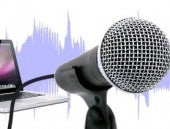
These days, many people are interested in recording their vocals; not necessarily for professional purposes, but for accompanying a YouTube video or for performing at home, for instance. Perhaps you’re learning how to sing and want to record your progress, or you want to entertain some guests in the sitting room by amplifying your voice through a speaker. To do this, you’ll need a microphone, but it doesn’t need to be a top-of-the-line piece of studio equipment. You can opt for a USB microphone or a straightforward vocal microphone, depending on your situation. In this blog, we’ll go through the necessary microphone accessories so you can capture or amplify your vocals successfully!