
Theory & Playing Technique
-

The guitarlele is a great 6-string instrument for anyone who feels like a ukulele is too small and a guitar is too big. As you’d expect from the name, the size of a guitarlele sits somewhere between a guitar and a ukulele, and if you want to learn to play this smaller-than-average, but not-too-small instrument, then you you’re in the right place. Here, we’ll guide you through tuning up your guitarlele, how to strike the strings, and even how to play rhythms and chords. If you have any burning guitarlele-related questions at the end, feel free to leave a comment!
1 response | in: Musician -

So, you’ve just picked up your first guitar and are itching to play a little something. You may already be able to pick out a simple melody, but what you really want is to play that rich sound shaped by multiple notes at once – also referred to as chords. In this blog, I’d like to help beginners on their way to learning, reading and playing their first guitar chords.
-

We’ve already covered the most used scales – the major and minor scales, and found out that the major scales have been solidly ingrained in Western musical heads for centuries already. What you might not be so aware of, is the dominance of the pentatonic scales which have helped shaped pretty much any popular contemporary music ever made. Just like the natural major and minor scales, there are major pentatonic scales and minor pentatonic scales. These scales are also easy to learn and can be quickly used for improvising.
-
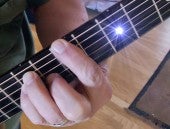
Most guitarists only ever learn to play open chords and two types of barre chords. The latter can be used all along the fretboard by sliding your fret hand up and down, which gives you two, maybe three different options to play the same chord. But what many players don’t know is that with only three extra chords, you can actually play each chord in five different ways. This is called the CAGED system.
-

It’s highly likely that you have no memory of ever having to learn to … sit down. But if you’re a pianist, the way that you sit at your piano is more important than you might think. When combined with your knowledge of technique and theory, a correct playing posture can make a world of difference to your playing, and is really easy to learn. And, if you maintain the correct posture, then you’ll also avoid any future back problems. In this blog, I explain how you can improve your piano playing, by simply learning to sit down!
-

Are you tired of being dependent on music books? Then you might want to browse through this blog and look at some of the strategies and tips that can help you memorise sheet music and play pieces off the top of your head. Next time you walk by a piano at a railway station, you’ll be able to sit down and steal the show!
-

If you want to be able to pluck solos out of thin air or even compose a ripping solo, then one thing is certain: you absolutely have to be able to improvise. The honing of this skill demands hours upon hours or practice and an experimental spirit. Only then do you have to power and intuitive flow to weave a stunning solo, even if you’re composing it bit by bit. This is not only about playing along with a recorded track perfectly, but is more about spending days on end inventing little lines of melody on the fly.
-

To end up as a drummer for a big band, you can’t escape beginning with a couple of basic rhythms. While the ones you’ll want to play are likely to depend on your stylistic preference, there are a few simple beginner drum rhythms that can be used in any style. In this blog, I’ll discuss four quintessential rhythms that offer endless experimentation and variation.
-
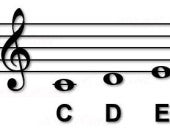
It makes sense to feel deeply impressed whenever you see and hear a musician play a complex piece of music reading it from a sheet of paper. A justifiable feeling on one hand, because it’s likely they have practiced and studied intensely to hone their skills. On the other hand, reading music actually isn’t all that difficult. No matter if you play piano, keyboard, guitar or drums, any instrument can be used to start with the basics, which include the commonly used C-major scale, also called the key of C. Don’t freak out now, it’s easier than you think!
-
Effects: what’s out there and what do they actually do to sound? There’s a lot of ‘em, so if you’re already struggling to see the woods for the trees (or the other way around), then put the kettle on and make yourself comfy while we give you a glimpse of what’s possible. In this introductory blog, we’re poking our heads into the magical realm of reverb. Sprinkle it over your project to conjure atmosphere or completely submerge your track so it sounds like it’s calling to you from another world.
-
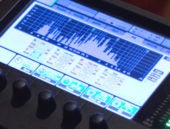
The EQ, short for equaliser, is the most important tool in any mixing engineer’s kit (aside from the level fader, of course). If you’re new to DAWs or mixers, you might be wondering what an EQ even is and how it’s used. And what’s the difference between a parametric and a graphic equaliser? In this blog, I’ll explain everything and even include explanations of important terms like curve and low cut/high pass.
-

If, as a musician, you find yourself staring at sheet music like an illiterate puppy staring at an episode of Countdown, then you’re not alone! It can be endlessly frustrating if you’re more than able to play your instrument, but learning to play a new piece costs you weeks if not months of your precious life. Maybe you give up halfway through, maybe you just keep plodding on; in any case, you probably wish you were just better at reading music. Or maybe you’re good at it, but just want to speed the process up. All of this is possible!
Comments Off on Better, Faster, Stronger: Learn to Read Music at Speed | in: Miscellaneous, Music Theory, Musician