
Musician
-

If you want to make a living from music – partly or entirely – then it’s worth having a good think about where exactly the money is going to come from. Almost every professional musician and music-maker has multiple sources of income, which in business-speak is referred to as a ‘revenue model’. To help you build yours, Guestblogger, Maaike lines up ten possible money-making options for your consideration.
Comments Off on Ten Ways to Make Money from Music | in: DJ, Guest Blogs, Marketing & Business, Musician, Songwriting & Composing, Studio & Recording -

While the bass looks a lot like the guitar, it demands an entirely different playing technique. In this blog, we’ll take you through some bass-playing basics, starting with the absolute fundamentals: the correct playing posture, both sitting and standing; the right-hand technique, where you’ll learn how to pluck the strings with your index and middle fingers and with a plectrum, and you’ll also learn to mute the unplayed strings and remove all that nasty low-frequency rumbling from your sound (a technique that actually involves both hands, but more on that later). Then, we’ll close with the left-hand technique to make sure that your thumb learns to rest against the back of the neck and that your other fingers are always ready and waiting in just the right spot, setting you up with a solid bass-playing foundation.
-

Ukulele posture is not something that a player can master instantly. Most players will have to slowly work on their posture over many months and years to ensure that they can play the most effectively and healthily, and each player will have their own ways of doing things. Below, guest blogger Matthew Quilliam explains how he approaches holding each size of ukulele, taking into account what he uses each scale length for.
-
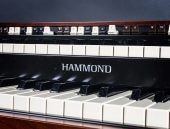
The Hammond is to the organ what the Hoover is to the vacuum cleaner. A household name, this timeless instrument is indivisible from classic rock and modern pop, whether it’s a vintage model or a modern digital Hammond, and decades before it even made the rock hall-of-fame, it was a mainstay of blues and jazz. Despite the fact that playing one means lugging a 100-kilo chunk of hardware from gig to gig, we find out exactly why this instrument is as much a legend as the musicians that have played it. Welcome to your definitive guide to the Hammond organ. Enjoy!
-

You probably already spend a lot of time watching YouTube videos, but did you know that YouTube contains a treasure trove of content that can help you become a better guitarist and musician? Whether you’re looking for a tutorial on how to play a song, a walkthrough of a guitar technique, an informative gear review or a vintage lesson, it’s all available on YouTube if you know where to look! Guest blogger Andrei Kryssov breaks it down.
Comments Off on How to use YouTube to Become A Better Guitarist | in: Guest Blogs, Guitarist, Musician -
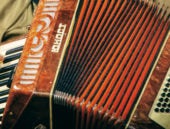
Believe it or not, the accordion is perhaps the most played instrument in the entire world, especially when you take the entire accordion-family into account. The truth is, the accordion is not just a mainstay of folk music but has managed to penetrate as far as the pop world. With that in mind, let’s get to know this one-of-a-kind instrument.
-

How different can singing jazz be from singing pop? The answer is: very different. Get your average pop singer to take on a jazz standard and it just won’t be jazz any more. Jazz singing demands an entirely different sense of timing, rhythm, phrasing and an entirely different attitude, and there’s one final essential ingredient: improvisation. In this blog, we tackle the techniques that make jazz singing possible.
-
Writing your own bass lines based on chord progressions. How do bassists do it? While there’s no magic mould, thankfully, there’s a fair number of guidelines you can use to come up with solid bass lines of your own. Experiment using the tips in this humble guide and chances are you’ll make great strides
-
Punk music might have died, but the timeless act of rebellion that is synonymous with many music cultures remains very much alive. It could be argued that backstage riders present artists with another opportunity to demonstrate their creative intrigue. If this aspect of showbiz interests you, then you’re in for a right treat. Banter Shack’s Steven Brooks takes the reins on this week’s guest post about the most infamous backstage riders.
-
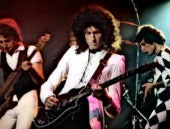
Queen was, and still is, a unique phenomenon in the world of rock. So, if you want to sound like Queen, then you have to sound just as unique, right? Which, if you put it that way, sort of implies that you shouldn’t sound like Queen at all. But in all seriousness, there’s something deeply satisfying, inspiring, and not to mention educational, about nailing the music of the band that you consider to be the best band in the world. In this blog, we take a deep dive into the remarkable sound that Freddie Mercury, Brian May, Roger Taylor, and John Deacon managed to weave with such grace and have a look at exactly what made Queen Queen.
Comments Off on How to Sound Like… Queen! | in: Musician, Songwriting & Composing, Studio & Recording -
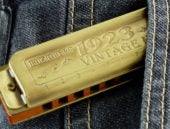
The harmonica is a small and seemingly easy to play wind instrument. They’re also pretty cheap, and in the right hands, can wield incredible power, not to mention masses of expression. This humble little instrument is sometimes referred to as a blues harp and has managed to weed its way into a broad array of genres, and in this blog, you’ll learn about the illustrious history of the harmonica, the various forms a harmonica can take, as well as some of its essential playing techniques.
2 responses | in: Musician -

If you’ve been playing the guitar for a while now, the standard EADGBE tuning might feel a bit like a musical straitjacket. If you want to go beyond standard tuning however, you’ll need to get off the beaten path. Open tunings open up a whole new world and can make playing guitar feel like an adventure again. “You’re forced to learn how to play guitar from scratch again,” says fingerstyle guitarist Hans Laduc.