
Studio & Recording
-

If you’ve already read my other blog on FM synthesis, then you’re ready for part two: an extensive tutorial on how to design sounds using FM synthesis. To give ambitious beginners a helping hand, I’ll be covering terms like operator, carrier, modulator, envelope, scaling and feedback, giving you all the basic knowledge you need to use either FM-based hardware such as real synthesizers, or FM-based software such as the Native Instruments FM8 virtual synth (included with Komplete) to sculpt your own sounds.
Comments Off on How to Sculpt Sounds With FM Synthesis | in: Keyboardist, Musician, Studio & Recording -

Given the infinite list of plug-ins you can add to your DAW these days, it’s easy to forget that, back in the day, every single effect was a separate bit of kit that needed to be hooked up. Not only that, parts could break and spilling a cup of tea was a serious job hazard. That being said, hardware-based effects are still made to this very day.
Comments Off on Digital Mixing with Hardware Effects – How It’s Done | in: Studio & Recording -
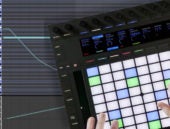
Ever wondered what MPE, or MIDI Polyphonic Expression can do for your Ableton Live productions? Guest-blogger Hens Zimmerman is here to explain the potential of this ground-breaking MIDI feature and show you how MPE can be used to shape super-expressive sounds.
Comments Off on How to Use MIDI Polyphonic Expression (MPE) in Ableton Live | in: Guest Blogs, Studio & Recording -
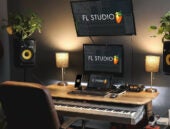
Discover 10 time-saving techniques in FL Studio with Workflow Hacks. As a music producer, efficiency and innovation are crucial in the studio. Guestblogger Mike Rosa used these hacks, tips, and tricks to save time and avoid headaches. Whether you’re a seasoned user or just starting out, these insights will help take your music production to the next level.
Comments Off on Discover 10 time-saving techniques in FL Studio with Workflow Hacks | in: Guest Blogs, Studio & Recording -

The venerable experts of Bax Music could offer up a thousand-and-one fascinating facts about the microphone, but since no one has time for that, we’ve hand-picked just five!
-
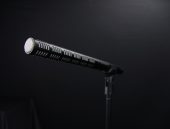
One of the most common mistakes that creators make when producing videos is not paying proper attention to the audio. No matter how expensive your camera and film lights are, if the sound isn’t up to par, your viewers will probably feel like your videos are missing something. Want to know how to record dialogue more professionally? Then read on!
-

Playing guitar with a tube amplifier at max power without the neighbours complaining – is it even possible? Well, yes. The only problem with playing through a tube amp is that it needs to be hooked up to a speaker cabinet before you flip it on. If you don’t, you risk doing irreparable damage to your amp. That’s because tube amps require a ‘load’, and that’s exactly where the loadbox comes in to replace your loud cab. Read on to learn how to use one and what it can do.
-

Dance music relies on rhythm, contrast and… tension. If your listener is just hearing the same thing again and again, they can quickly drift off, so any good EDM producer wants to keep things interesting and keep the tension building. The break is a great opportunity to build tension, since it gives your listener a chance to catch their breath before you shift things up a gear with the build-up and smack them with the inevitable drop. Here, Guestblogger and DJ/producer Rutger Steenbergen offers up seven tips for building up to the ultimate drop.
Comments Off on EDM Tips & Tricks: How to Make the Ultimate Drop | in: DJ, Guest Blogs, Studio & Recording -

Guestblogger, Sander is a professional voiceover artist. Every working day, you’ll find him sitting behind his microphone in his booth at home, recording voice overs for everything from web videos to commercials – including Bax Music ads. In fact, Sander has been the ‘voice’ of Bax Music for ten years already. In this blog, he shares his trade secrets when it comes to recording the perfect voiceover.
-
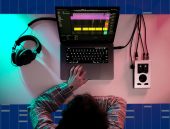
Finding the right chords for a new tune is never easy. Thankfully, guest-blogger Hens Zimmerman is here to help ease the process with Ableton Live, but first, let’s look at a little music theory.
-
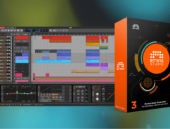
These days, a lot of audio interfaces and MIDI controllers come with a free edition of Bitwig, but what is Bitwig exactly? Bitwig is a pretty young DAW (Digital Audio Workstation) that manages to mix together all of the best bits of other well-known recording software like ProTools, Cubase and Ableton before throwing in a few new and unique functions of its own. Here, we take a tour through the software to see what’s what.
Comments Off on Bitwig for Beginners – Audio & MIDI Recording in 5 Steps | in: Studio & Recording -

These days, it’s almost standard practice to record every member of the band separately, whether you’ve booked some time in a recording studio or you’re doing everything at home. But, for a lot of reasons, more and more bands are longing to make a return to full band recording, where every member of the band is recorded at the same time, while playing together – in the same room – but preferably not in a hyper-expensive recording studio.The problem is, the two channels of your audio interface just won’t cut it. Even with eight channels, you’re going to fall short. So what’s possible? Can you even get massive multi-channel audio interfaces? Or will you need to kit out the band with a specialised recorder or mixer?
Comments Off on How to Record a Whole Band: Audio Interface, Recorder or Mixer? | in: Studio & Recording