
Studio & Recording
-
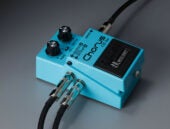
Effects: what are they and what do musicians actually do with them? When it comes to music, effects are everywhere, so if you’re struggling to see the wood for the trees, this blog has been written to offer a guide for anyone taking their first steps into the more technology-based side of music. Here, we’ll cover chorus and what you can do with it, but we’ll also look at concepts related to creating ensembles.
-

As soon as the first electric guitars and guitar amplifiers popped up in the 1950s, distorted sound went from being a nuisance to being an enrichment. What’s more, without distortion, styles like rock, punk and metal probably never would’ve existed, and in styles like EDM and hip-hop, using the effect has practically turned into an art form in its own right. That said, distortion isn’t always desirable. Read on for the hows and whys.
Comments Off on Distortion: The Good and The Bad | in: Studio & Recording -
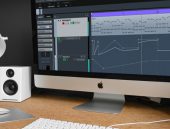
When it comes to mixing music, mix automation refers to track settings that can be automated, like volume, pan, send and mute. By automating these settings via DAW software, their values be varied throughout the song. Take a volume fader assigned to a guitar track for example – by automating it, you can set it to automatically boost the volume by a few decibels when the solo starts.
Comments Off on DAW Automation: What It Is And How It Works | in: Studio & Recording -

Recording a solo singer-songwriter? How hard can it be? All you need to do is set up one or two microphones and hit record, right? Unfortunately, it’s not actually that simple. If you’re only using one microphone, you have next-to-no control over the balance. And, even though using two microphones is the smarter option, how do you deal with any phase issues? Of course, your singer-songwriter could be playing any instrument, but in this blog we’ll focus on recording vocals and an acoustic guitar at the same time.
-

Whether you’re making pure electronic music, indie-rock or pop, the humble synthesizer is near-indivisible from the modern music landscape. Since synths are only getting cheaper, it’s likely that you’re already busy twiddling knobs and pushing faders, but what if you want to actually record the sound of your synth? Here, our Guestblogger Melvin Rijlaarsdam explains what’s involved and how to get the best out of your synth in the studio.
Comments Off on How to Record Synthesizers | in: Guest Blogs, Keyboardist, Musician, Studio & Recording -

Mic bleed is the bane of many-a recording engineer’s existence and can easily throw a spanner in the works for mixing engineers and producers. After all, hearing the hi-hats on a snare take or having guitars inadvertently mixed in with the vocals are issues that require a lot of time to fix. Want to know how to avoid, remove or even use mic bleed to your advantage? Then read on!
-
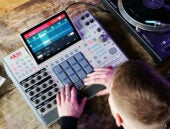
In the world of studio controllers, synthesizers and drum machines, the terms ‘x0x’ and ‘MPC’ are all over the place and refer to different interfaces for creating note sequences. In the revolutionary case of MPC, there’s one brand that started it all: AKAI. Read on to find out how it all began and ultimately resulted in the brand-new MPC X SE Special Edition.
1 response | in: Studio & Recording -
Maybe you’ve already picked through our Synthesizer Buyer’s Guide and been left wondering what exactly FM synthesis is. If so, you’re in the right place. Basically, FM synthesis is a sound-creating method that, according to a lot of people, isn’t the easiest of methods to work with and is best avoided. But anyone who does avoid it, is really missing out. Despite its tricky reputation, FM synthesis is well worth getting to know, and the more you know it, the more you’re likely to love it.
-

Producing properly balanced mixes can be a real struggle. Fortunately, guest-blogger and home studio coach, Ben van Essen is here to explain why the secret to better mixes doesn’t lie in using more plug-ins, but in simply mixing in mono.
-

Sometimes, you might wonder how some tracks sound like the band is standing in your living room. The singer is right in front of you, the bassist and drummer seem to be set up just behind them and the guitar and synthesizer seem to be coming at you from the sides. How does a mixing engineer manage to create so much depth via just two speakers? In this blog, we explain how you can make your own stereo mixes feel more three-dimensional using nothing more than the tools that came with your DAW, including panning, a chorus, doubler, reverb and some EQ. In other words, you can learn to pack your mixes with the illusion of space.
Comments Off on 3D Stereo Mixing: Create Depth with Just Two Speakers | in: Studio & Recording -

While I write this, I’m browsing Spotify for different drum sounds. Take the new Lamb of God album, You Got Me from The Roots and Get Lucky by Daft Punk. All of them feature incredible drum mixes and all of them have a completely different sound. This alone makes it pretty clear that this blog could never provide a one-size-fits-all manual to mixing drums. What it can do is offer a few tips and techniques to help you lay down a good and solid drum sound that can work as a foundation for your unique mix.
Comments Off on Mixing Drums – 6 Tips for Getting a Solid Foundation Sound | in: Drummer, Studio & Recording -

The shorter the distance between the source and the microphone, the more low frequencies are registered at the cost of high frequencies. This is what’s known as the proximity effect, and it applies to a lot of microphones. In practice, this usually means that the closer you close-mike your voice or instrument, the fuller it’ll sound. Read on and learn how to take advantage of it.
Comments Off on Microphones and the Proximity Effect | in: Live Sound, Microphones, Musician, Singer, Studio & Recording