
Theory & Playing Technique
-

In this blog, we’re going to focus on two scales that provide an endless supply of transition tools. These magic scales are the octatonic and altered scales, and while you won’t come across them in much popular music, these scales are compulsory reading for any jazz, blues, or progressive pop and rock musicians looking for a fresh approach.
-

The fact is, there’s no right or wrong way to wear a guitar strap. But, if the length of your strap doesn’t match up with the way you play, it can have a pretty negative effect. In this wee blog, we take a look at the advantages and disadvantages of a super-long, super-short, or somewhere-in-the-middle guitar or bass strap.
-

In this blog, you’ll get a full explainer on how to transpose musical score. Transposing basically means shifting the notes of a piece of music up or down by a semitone or more so it can be played in a different pitch. Of course, there’s plenty of software you can use to transpose sheet music, but you learn way more when you do it yourself. And, since you can pull it off in three steps, why wouldn’t you? Is it easy? Well, not at first, but if you take your time and follow these instructions, then you’ll definitely be able to do it. We’ll take a look at transposing with software; with nothing more than pen and paper; and even transposing on the spot while you’re playing. We’ll also look at how to pitch-shift audio files.
-

Trombones are part of a category of instruments called low brass and generally take care of the ‘body’ of the sound produced by symphony orchestras, big-bands, salsa acts and pop-band brass sections. When played using a plunger mute, the trombone can laugh, cry, whine, roar, talk and incite emotion, making it one of the most expressive instruments on the planet.
Comments Off on The Trombone: Types, Playing Techniques and More! | in: Musician -
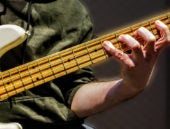
Learning to play arpeggios and understanding how they work is an essential skill if you want to write some solid bass lines. Basically, arpeggios are what happen when you play the single notes of a specific chord in succession. They’re well worth learning, since an arpeggio will always match perfectly with the chord that the guitarist or key-player is hitting. So, for a bassist, practising and nailing a small library of arpeggios is actually a better first step than memorising scales, because it immediately sets you up with a full kit bag to work with when it comes to writing your own bass lines. So grab your bass and start drilling.
-

A band is rarely complete without a bass, and while the bass provides the sonic foundation for the rest of the band and is an essential part of the rhythm section, it’s often overlooked – unless the bassist misses a beat or fluffs a line, of course. Here we find out exactly why the bass is so important; present its illustrious history; and cover some handy techniques and tips.
-
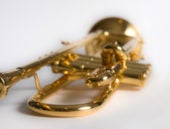
While the trumpet is centuries old, it’s more than proved its staying power across multiple genres. The trumpet is an unmissable element of classical music, and when it comes to jazz, it’s probably the most iconic of all time. Even countless popular songs have included its unique voice, all the way from seventies reggae and ska to more recent EDM bangers. Here, we cover the history, take a deep dive into the anatomy, have a look at the many variations and playing techniques, and list some legendary masters of this popular yet notoriously difficult brass instrument.
Comments Off on The Trumpet: The History, Models & Techniques | in: Musician -

While the bass looks a lot like the guitar, it demands an entirely different playing technique. In this blog, we’ll take you through some bass-playing basics, starting with the absolute fundamentals: the correct playing posture, both sitting and standing; the right-hand technique, where you’ll learn how to pluck the strings with your index and middle fingers and with a plectrum, and you’ll also learn to mute the unplayed strings and remove all that nasty low-frequency rumbling from your sound (a technique that actually involves both hands, but more on that later). Then, we’ll close with the left-hand technique to make sure that your thumb learns to rest against the back of the neck and that your other fingers are always ready and waiting in just the right spot, setting you up with a solid bass-playing foundation.
-

Ukulele posture is not something that a player can master instantly. Most players will have to slowly work on their posture over many months and years to ensure that they can play the most effectively and healthily, and each player will have their own ways of doing things. Below, guest blogger Matthew Quilliam explains how he approaches holding each size of ukulele, taking into account what he uses each scale length for.
-

You probably already spend a lot of time watching YouTube videos, but did you know that YouTube contains a treasure trove of content that can help you become a better guitarist and musician? Whether you’re looking for a tutorial on how to play a song, a walkthrough of a guitar technique, an informative gear review or a vintage lesson, it’s all available on YouTube if you know where to look! Guest blogger Andrei Kryssov breaks it down.
Comments Off on How to use YouTube to Become A Better Guitarist | in: Guest Blogs, Guitarist, Musician -

How different can singing jazz be from singing pop? The answer is: very different. Get your average pop singer to take on a jazz standard and it just won’t be jazz any more. Jazz singing demands an entirely different sense of timing, rhythm, phrasing and an entirely different attitude, and there’s one final essential ingredient: improvisation. In this blog, we tackle the techniques that make jazz singing possible.
-
Writing your own bass lines based on chord progressions. How do bassists do it? While there’s no magic mould, thankfully, there’s a fair number of guidelines you can use to come up with solid bass lines of your own. Experiment using the tips in this humble guide and chances are you’ll make great strides