
7 golden rules for the beginner mobile DJ
Published on Friday 8 May 2026
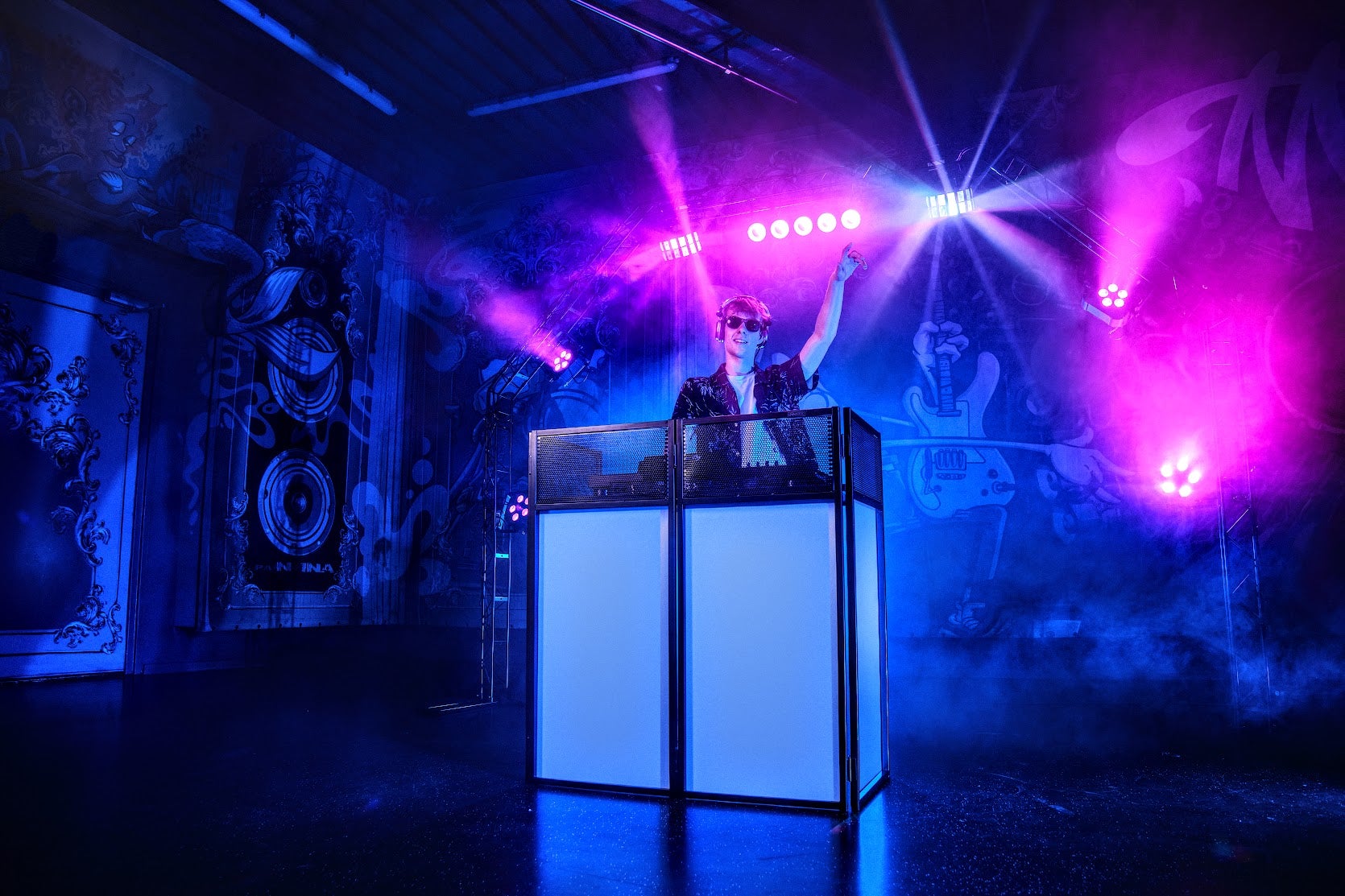
You’ve been DJing at home every evening for a year on the DJ controller you bought from Bax Music. And then, suddenly, the question comes up: “Will you DJ at our party?” Even more exciting: they expect you to provide the sound and lighting yourself. Uh-oh… what kind of setup do you need, and how do you prepare? Luckily, you don’t have to reinvent the wheel. Bax Music points you in the right direction with 7 golden rules for the beginner mobile DJ.
Rule #1. Pro audio, not poor audio
The most important audio rule is that the crowd gets excited about your awesome sound. So start with a speaker set for (small) live gigs: enough power, solid sound, and tough enough for transport. Not: crackly living-room speakers or some beach Bluetooth thing. Also not that one-and-a-half-metre-tall party speaker with little lights: fun for a garden party, but not enough power for a packed venue. While the amount is manageable, you will need to take a serious look at your savings. A ‘pro’ investment isn’t free.
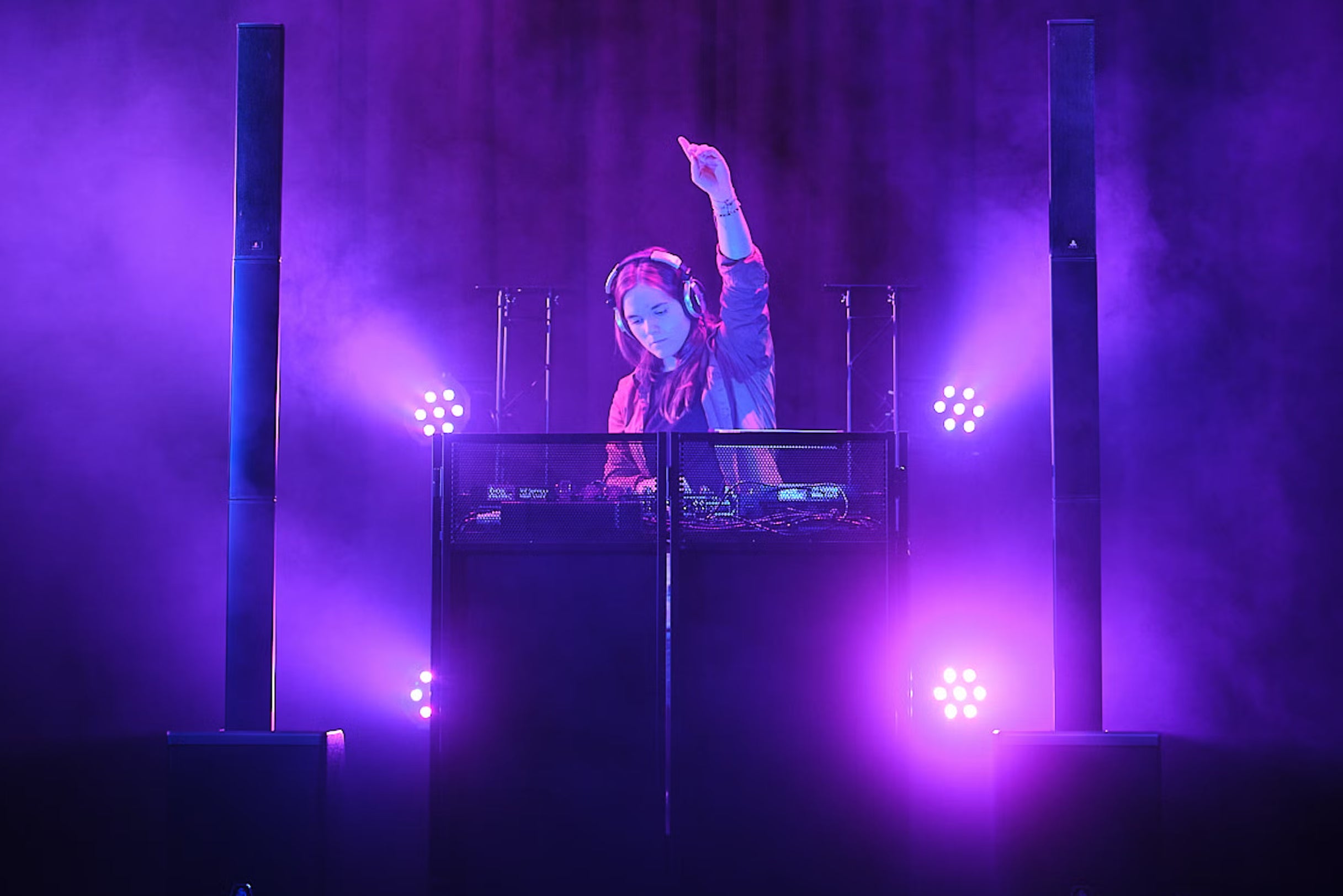 Photo: two column systems (one may already be enough)
Keep the future in mind
Keep a realistic future in mind. So don’t fantasise about instantly becoming Tiësto, but also don’t assume you’ll stay an ‘amateur’ forever. Things can move faster than you think. Tip: think about what you’ll need in the near future — and then add a little extra on top. That way, you’ll be ready for unexpected situations. Do you think small parties are going to be your main thing for a while? Then go for a column speaker system or a compact 2.1 speaker set.
Small parties: column system or compact 2.1 set
They take up minimal space, both on location and during transport. They’re also usually quick to set up and sound very full and balanced. The downside is that they’re harder to expand into bigger setups with more power.
» Devine Vertix C10A column speaker system set
» Devine Onyx 8 + 15SXA 2.1 speaker set
» Devine Onyx 10 + 18SXA 2.1 speaker set (bigger speakers, for more bass)
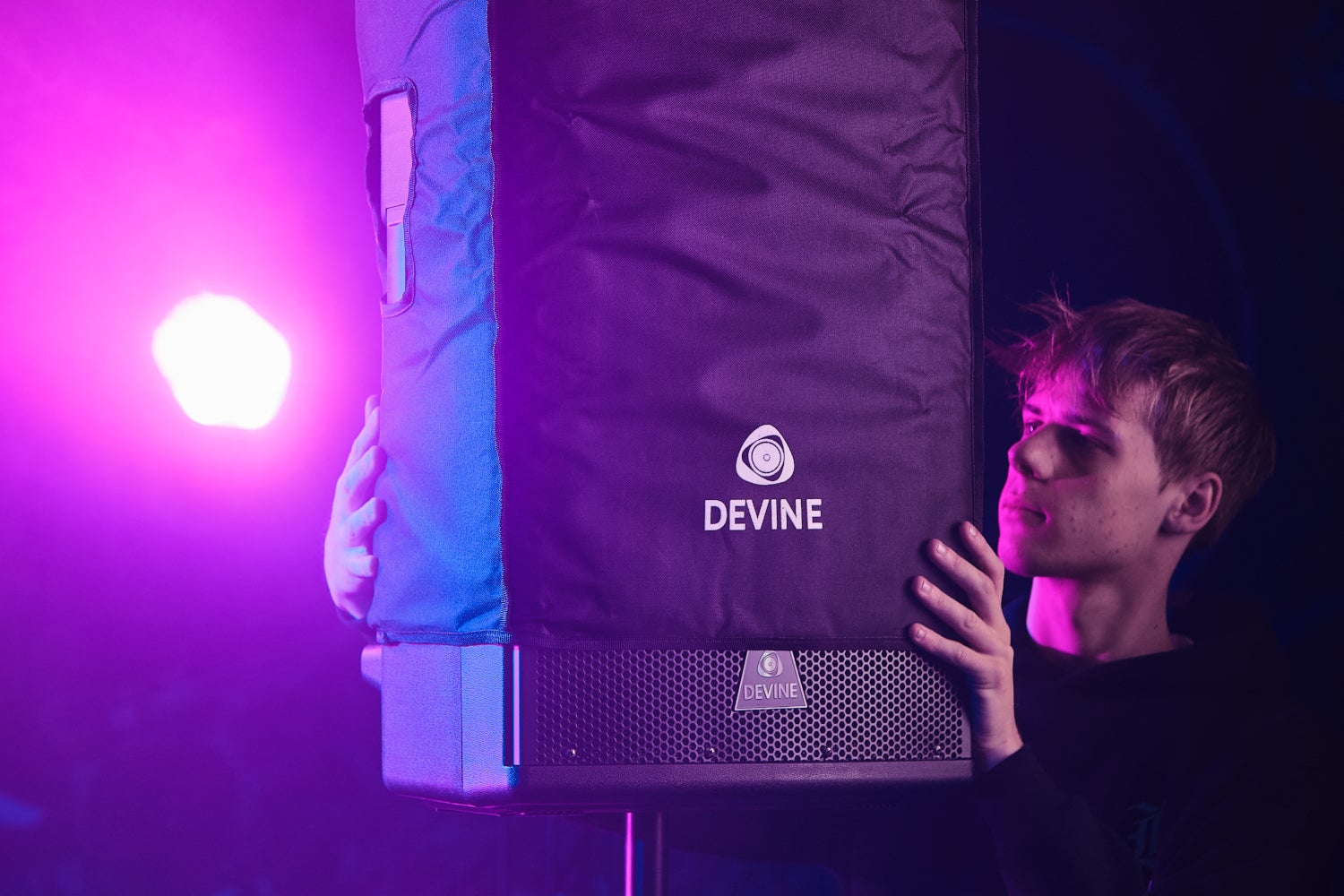
If you’re thinking bigger
Do you think you’ll expand in the short term? Invest in a classic PA speaker setup. Most DJs go for two 12-inch speakers (which you can now or later add a 15- or 18-inch subwoofer to), because it’s a great middle ground. You get a nice, powerful sound without breaking your back lugging gear around. You also don’t have to bring a subwoofer straight away. Sure, 12-inch doesn’t emphasise the low end as strongly, but for many music styles it already sounds nicely full and balanced in a small venue.
Examples of 12-inch speakers and sets
Popular speakers to start with are:
» Devine Onyx 12A active speaker
» Devine Axeo 12A active speaker
» Electro Voice ZLX-12P active speaker
» Mackie Thrash212 active speaker
» dB Technologies Opera 12 active speaker
From there, you can grow into setups like:
» Devine Axeo 2.2 speaker set 12A + 15SA
» Devine Onyx 12A (2x) + 15SA (2x) set
Or another pro audio set consisting of two speakers with additional subwoofers.
How should I place those speakers?
In any case, not directly on the floor or on a table, because it’s essential that the sound spreads through the room. So put both speakers on their own stand. If you also have two subwoofers, you don’t need stands — you can place the speakers on top of the subs using distance poles. If you have one sub, do place the speakers on stands, and put the sub, for example, behind your DJ booth.
Rule #2. A bit of atmosphere is better than no atmosphere
You’re right: it’s about the music, not pretty colours. But dancing under fluorescent lighting is a bit of a mood killer, isn’t it? If you’re worried that lighting is difficult, here’s some reassurance: there are no lighting laws, only rules of thumb. With a few multi-colour light effects that automatically react to the music, you’ve got a starting point — and that’s better than nothing. But by the end of the night, you and the partygoers will be tired of the chaotic flashing. How to easily improve that light show, you’ll read below.
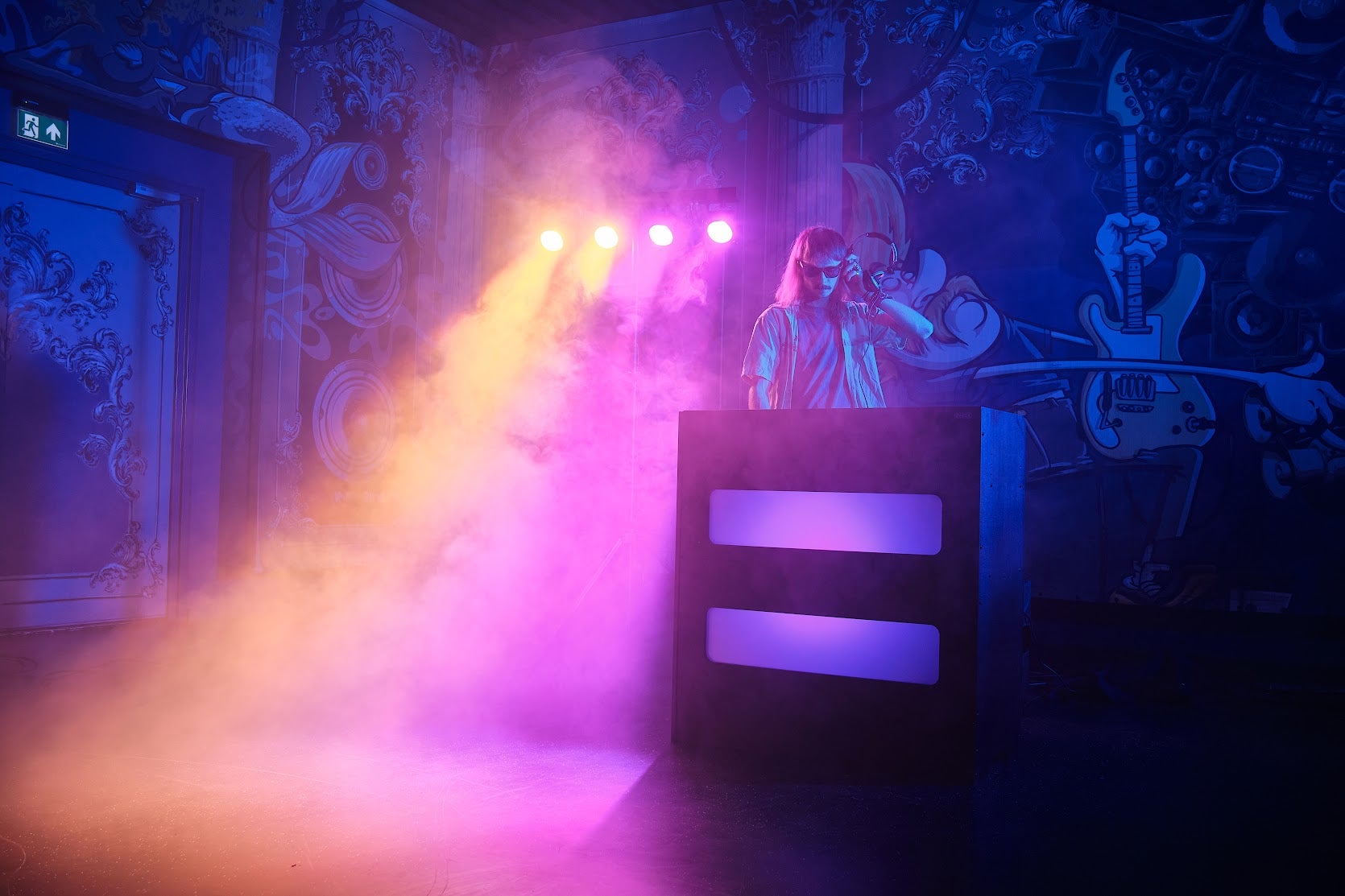
Lighting control for a pro performance
Remote lighting control isn’t a must, but it is the best way to make everything work together. Because, as said, without control it quickly becomes chaotic. To avoid that, use a platform like Wolfmix or a software solution like Light Rider or Daslight/Sunlite. Create a calmer vibe in the venue by, for example, having the lights change in time with the beat or using classic chaser programmes. That way, your lights work with each other. Your audience will appreciate a harmonious show!
Basic lighting: essential
Just like beats are essential to your music, basic lighting is the foundation of your light show. You can easily create that base with a few spotlights. You can also use uplights to create ambience — for example by giving a few walls or pillars a fitting colour. You can use standard RGB LED spots for this, but also take a look at LED bars, uplighters, wash moving heads or a combination of those.
Effect lighting is also essential, but…
Watch videos of big-name DJs at festivals and in nightclubs and look at how effect lighting is used: only during the most energetic parts of the music do those effects kick in — otherwise they lose their impact! You don’t get presents every day either; only on special occasions. For effect lighting, think strobe lights and blinders, or for simpler setups, one or more light effects. And with a bit of creativity, you can simply have your basic lighting flash like a strobe — in other words, also look at what you can get out of the gear you already have.
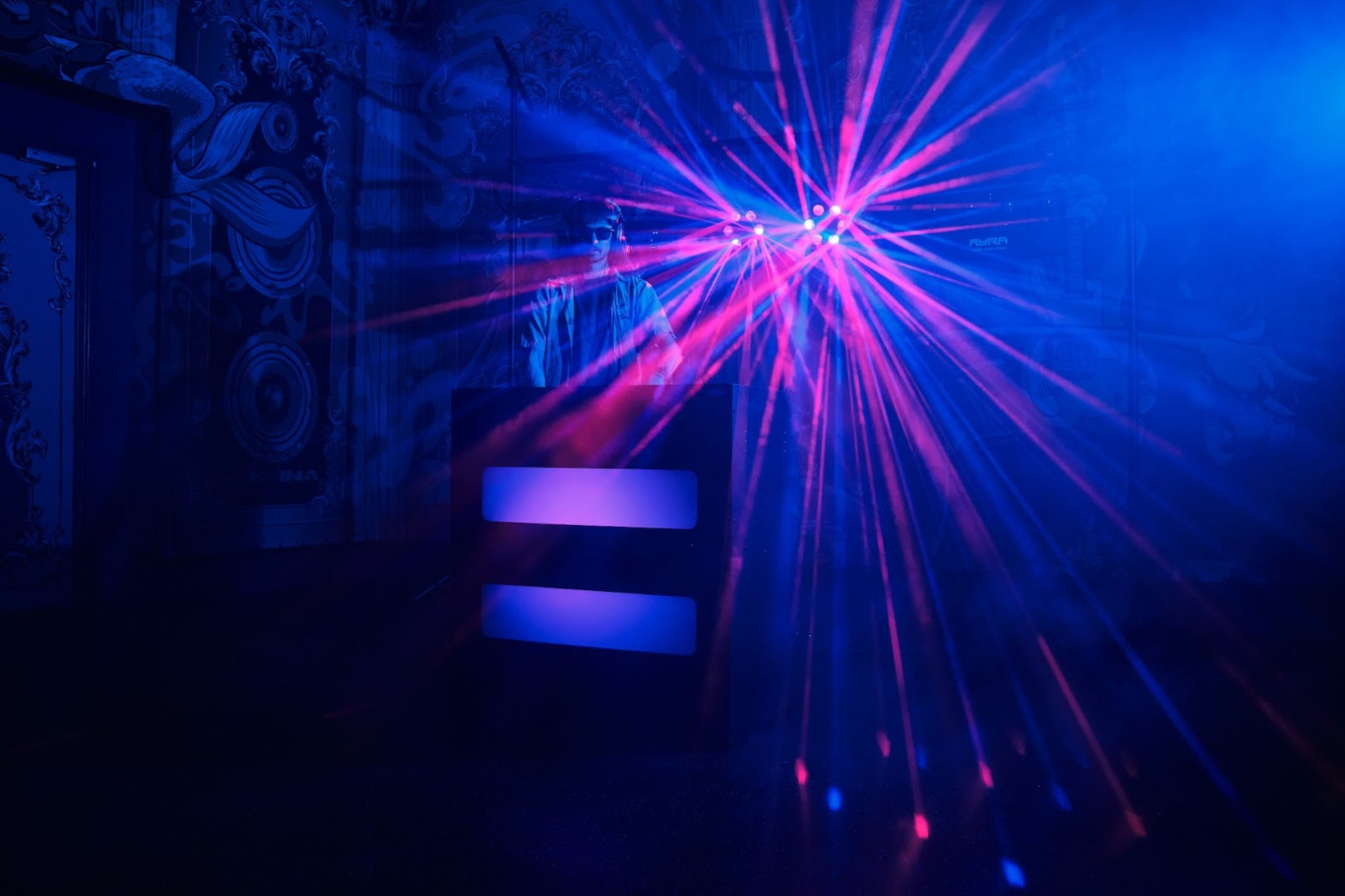
Bright lights: spectacular or annoying?
If someone shines a torch in your face, you’ll squeeze your eyes shut in irritation. Same with light shows. Your audience probably won’t complain, but you know that light in their eyes isn’t pleasant. Lighting behind your booth is fine, as long as it’s positioned to your left and/or right. That also makes you more visible and helps you connect with the crowd. Do place the lights up high, angled downwards, so that you a) light the dance floor, b) don’t shine into people’s eyes, and c) don’t have the first row blocking the beams.
Decor effects as an extra layer
‘Decor’ effects, like mirror balls, LED tubes and LED strips, are the kind of lighting you can comfortably look at without sunglasses. They dress up your DJ booth and can give your setup a unique, recognisable look. Plus: the more the surroundings are lit, the less the audience experiences the bright beams of other lighting as annoying. For example, combine uplighters in the room with fast-moving, bright light from moving heads to create a harmonious whole.
How do you start easily?
Decide what you need lighting-wise, then look for a practical solution. These days, you can get all kinds of handy lighting sets with multiple spotlights on a bar, including a carry bag, like the Ayra Compar Kit Jr., or ready-made multi-effect bars like the Chauvet DJ Gigbar 2 kit. Those are easier than a T-bar where you have to screw on separate spotlights or effects yourself — and then cable each one individually. Also think about transport and storage: will you go for flightcases, or will only bags fit in your vehicle?
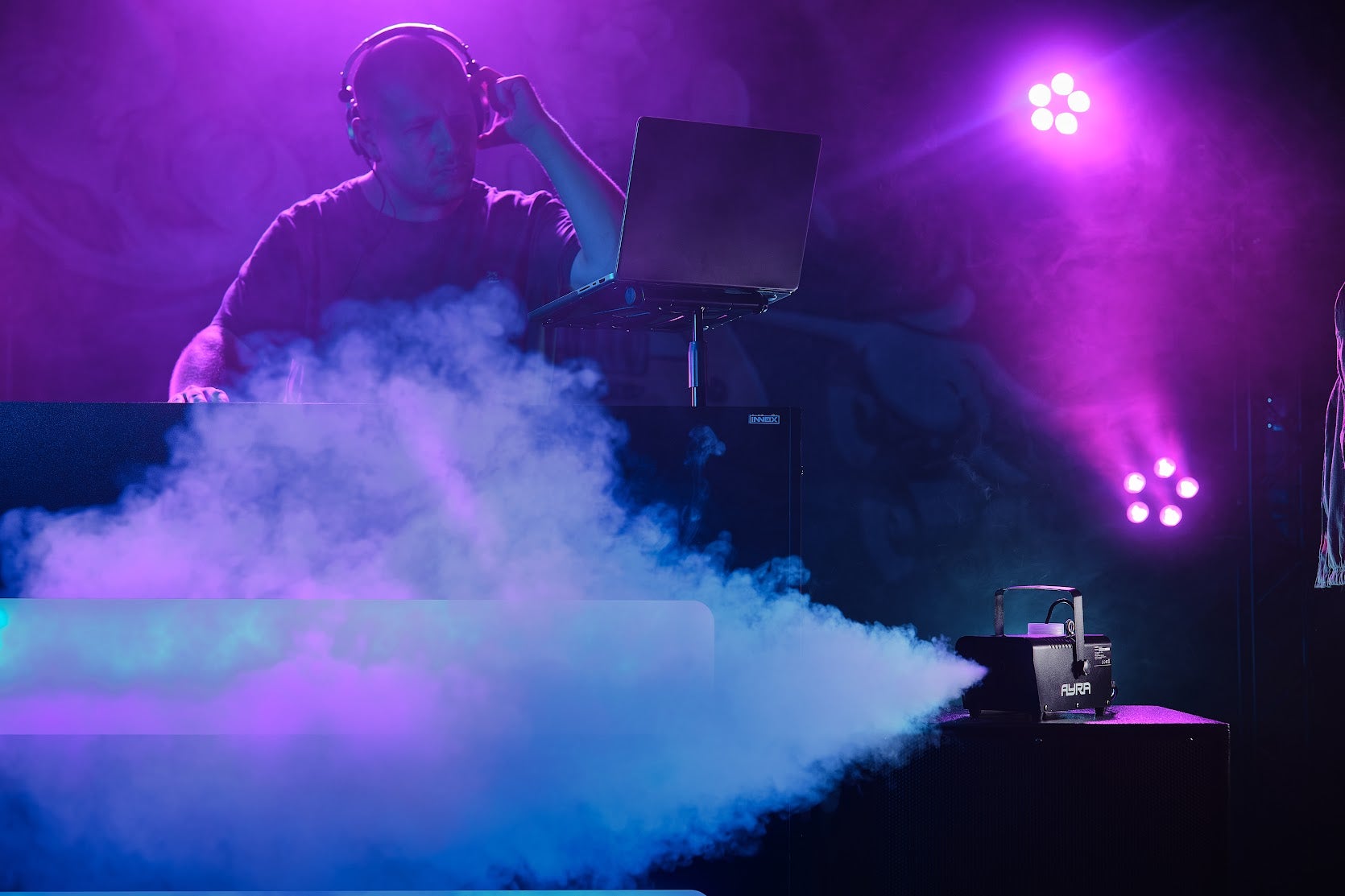
How important is smoke?
A smoke machine or hazer is a simple but incredibly effective way to add even more atmosphere and experience to your show. The smoke makes the light beams beautifully visible in the air, so the audience experiences more depth and dynamics. Do keep in mind that smoke sometimes isn’t allowed, for example because of a fire alarm system with optical sensors. You don’t want a fine, your set being interrupted, or a visit from the emergency services. Check with the organiser or venue manager!
Rule #3. Your time is worth money too
Make it easy on yourself. Say you DJ for 3 hours at a party, but before and after that you’re also spending 3 + 3 hours setting up and packing down. Are you going to charge a lot of money for all those hours? Then you’ll probably be too expensive for the organiser. Or will you only charge for the 3-hour performance? Also not smart, because your hourly rate will end up being pretty low. That’s why our advice is: minimise your setup and pack-down time.
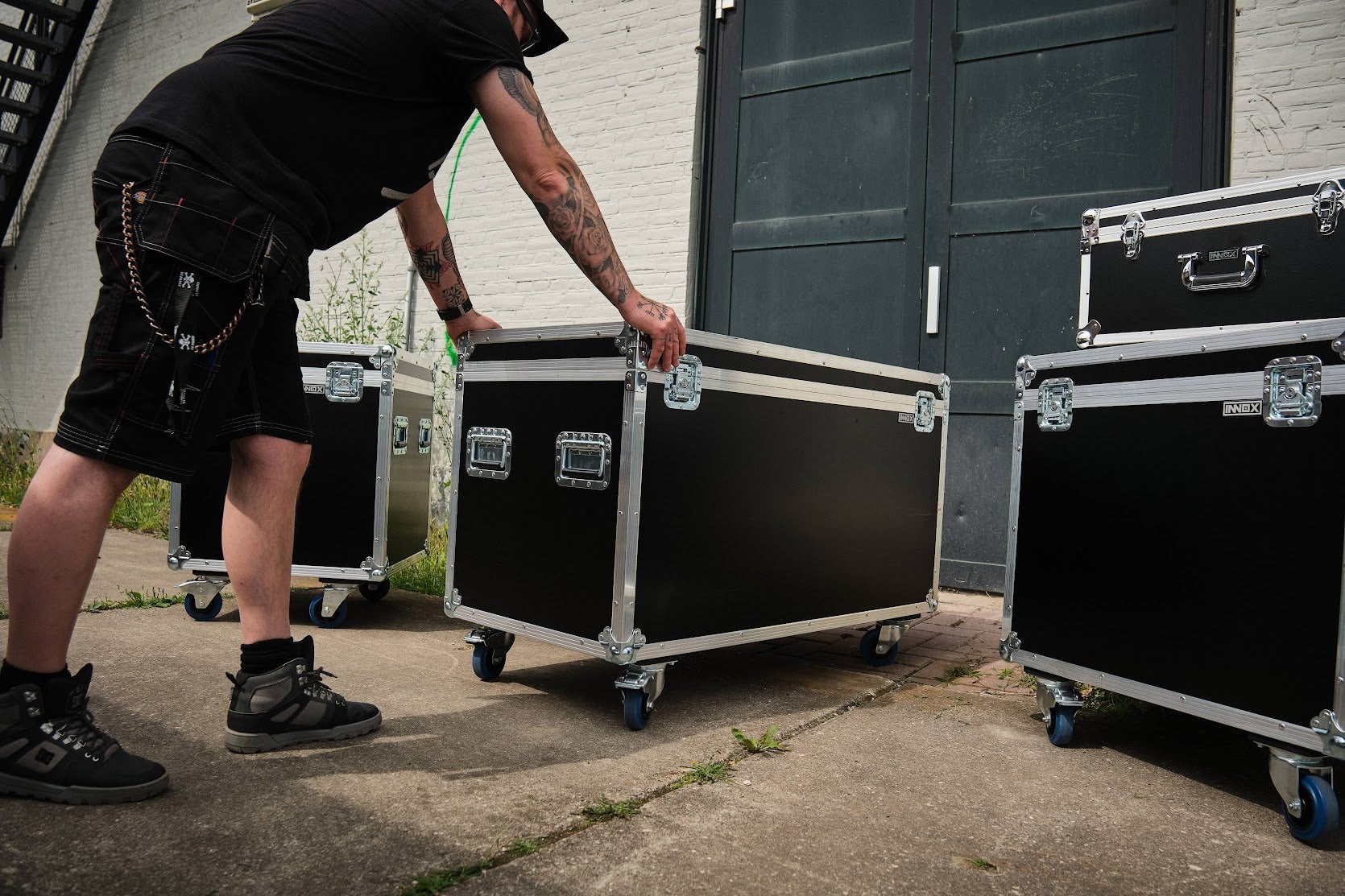
“But I know a DJ who…”
But aren’t there loads of DJs who haul around mega booths, including two-metre truss totems, fully loaded audio racks, a big backdrop and uplights against the walls? How do they do that? Well, as much as possible is plug & play and after the gig it all goes straight into a van or trailer. Nice, big and professional = usually well thought out and built efficiently, so they can work fast and offer a competitive price.
If you’re (still) not rich…
If you’re limited by your vehicle — and possibly your storage space — you’ll need to be smart about it. Don’t have a van or an estate car available but you do have a car with a tow bar? Then consider a trailer for transporting your gear. Or try to keep your setup as compact as possible. Often, lighting and audio products in slightly higher price brackets can achieve the same (or more) in a smaller size and with less weight.
No more surprises for you
Nine times out of ten, you can park right outside. But that one time, it’s a let-down and you have to walk a fair distance with your gear. You know it’s going to happen. With a (good!) transport trolley, hand truck, or flightcase on wheels, you’ll save a surprising amount of time and energy. Don’t forget thresholds and steps, either. Be ready for challenges by thinking about accessories — and by researching the gig location.
Rule #4. Everything goes fine… until it doesn’t
“Safety… yeah, whatever. It always goes fine, doesn’t it?” Maybe you’re the kind of DJ who likes to wait until you get the fright of your life. For example, when someone leans over your booth to ask for a song and—oops—tips their drink into your DJ controller. Or maybe you’re someone who’d rather be prepared for unpleasant situations for you and the audience. Either way, preparing for safety doesn’t take nearly as much effort as you might think!
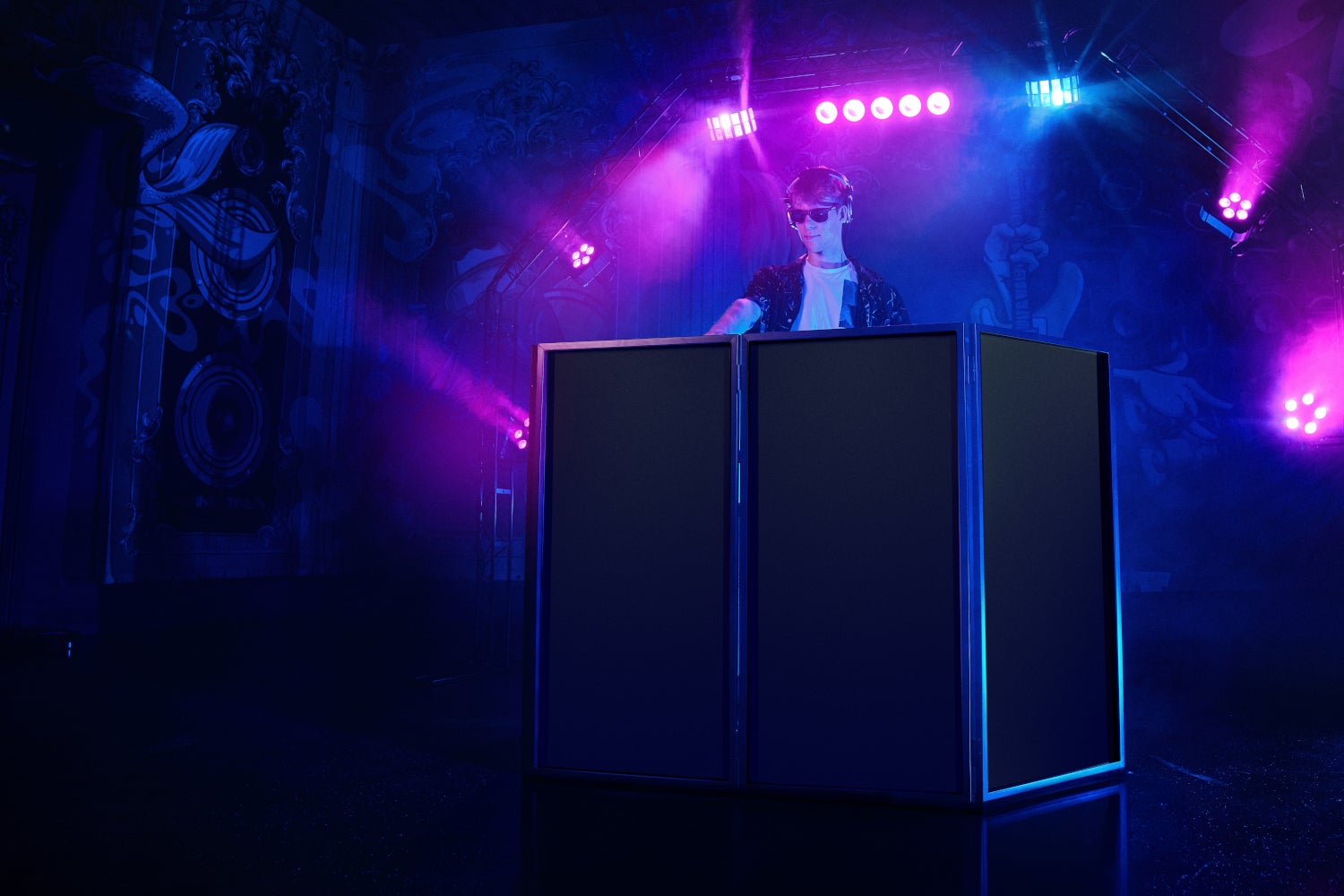
Turn your booth into a castle
Make your DJ booth high enough and ideally use a slanted front — or at least a panel where nothing can be placed. That way you prevent your booth from becoming a gathering spot for glasses. When it comes to people with song requests, make sure they have to walk all the way around the booth if they want to reach you. The bigger and wider the DJ booth is, the more likely people are to do exactly that.
I spy with my little eye
Think about your guests’ safety. 1. Don’t set up in front of an emergency exit. It’s an easy mistake to make, because when you arrive with your gear, your mind is on completely different things. 2. Keep walkways clear: make sure stands aren’t trip hazards and run cables tightly together, taped down to the floor (always gaffa, because of sticky residue). 3. Consider the type of audience when placing your gear. For example, if you’re DJing at a kids’ party, that (hot!) smoke machine making lovely clouds is far too interesting for little hands.
Rule #5. Parties are always perfectly organised (not)
And who’s standing there in a red cape to save the party? The DJ. The organiser wants the party to be a success, but also has a million things to do. That’s why anything to do with lighting, sound and video often gets dumped on you at the last minute. Do you then say: “Oh, I don’t have that, no idea…”? Or do you, as the entertainer for the night, solve the problem calmly so everyone stays in a party mood?
How to become super(wo)man
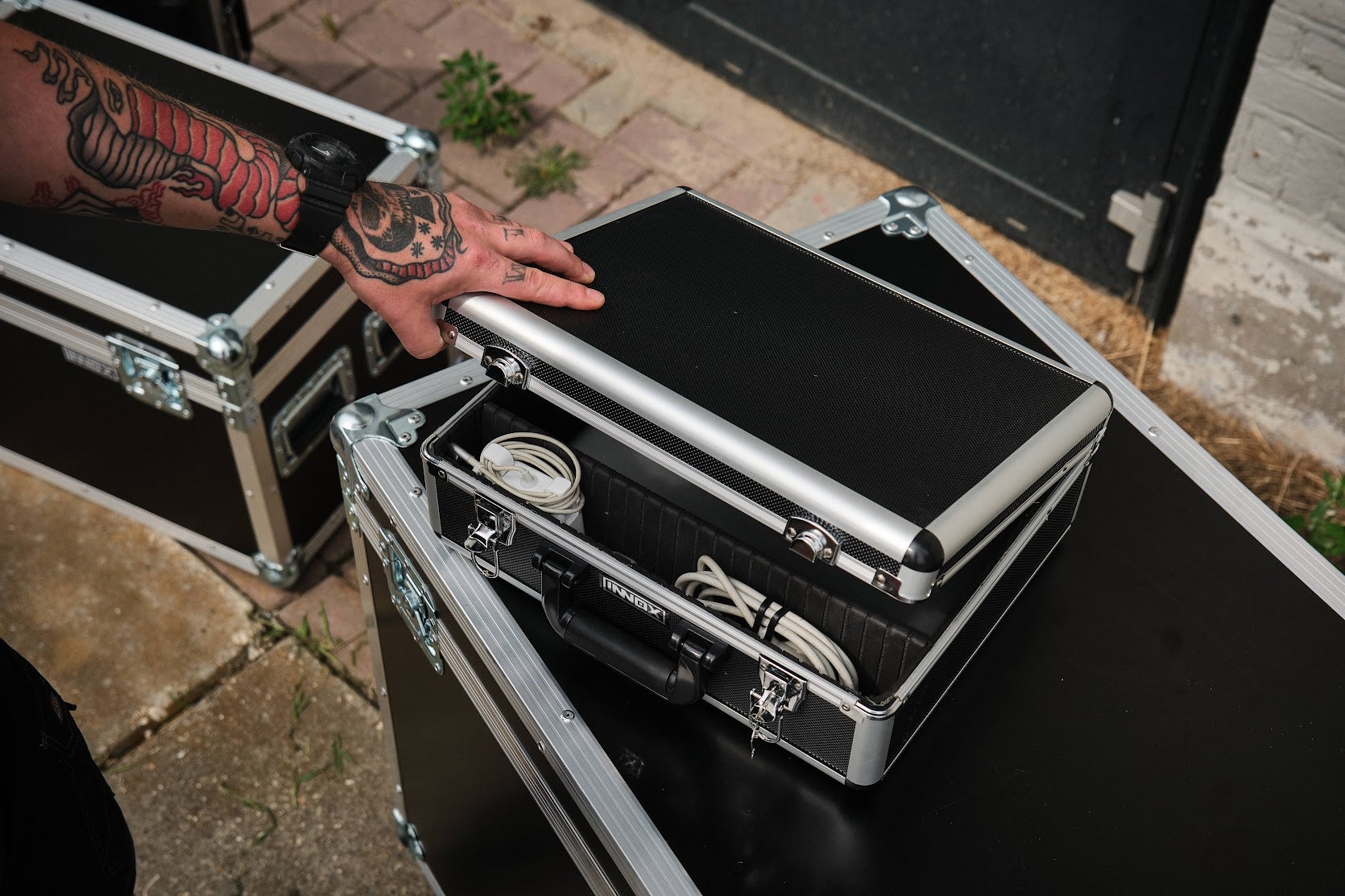
Anyone who knows Mary Poppins will know her magical bag with seemingly endless space inside. You’re now going to put together your own magical flightcase or bag. You’ll organise it so smartly that, to other people, it looks like it literally contains everything they can think of. Soon, your answer to every question will be: “Oh, I’ve got that—here you go…!”
For example, it contains
- Aux cable: no messing about with Bluetooth pairing. Requests that only exist on someone’s phone can be played via a cable from the headphone output if possible.
- USB stick: wireless networks are brilliant at dropping the connection at the worst moments. Copying via a stick is old-school reliability.
- Media player that’s a real “plays anything” device: CDs, SD cards, USB sticks—bring it on.
- Various batteries for remotes, wireless microphones, etc. Not just for your own gear, but also to help others out.
- An extra wired microphone and headphones/earbuds, even if they’re just simple, cheap ones.
- An extra power strip with a cable that isn’t too short, and a cable reel.
- Gaffa tape (a few rolls), insulation tape, tie wraps, cable ties.
- Screwdriver set, Allen key set, small set of pliers, other basic tools, a torch.
- A small box of spare fuses in various ratings.
- The most common audio adapters and converter leads.
- Business cards with your contact details, because one party often leads to another.
- And with experience, your case will keep getting more practical.
Rule #6. The DJ knows everything
You’ve just learned that the DJ can do anything. But you also know everything. About what? About what’s coming your way. You know what time the music can be loud and what time the fluorescent lights have to come back on. And that there’s a buffet first, and after that a singer-songwriter who’d like to plug into your system for a moment. You know what time you can set up, and that someone will stay until you’re finished packing down. Assume the client will forget to tell you lots of things, and that you’ll need to ask dozens of questions to get everything clear.
The big question: are you a dreamer or a doer?
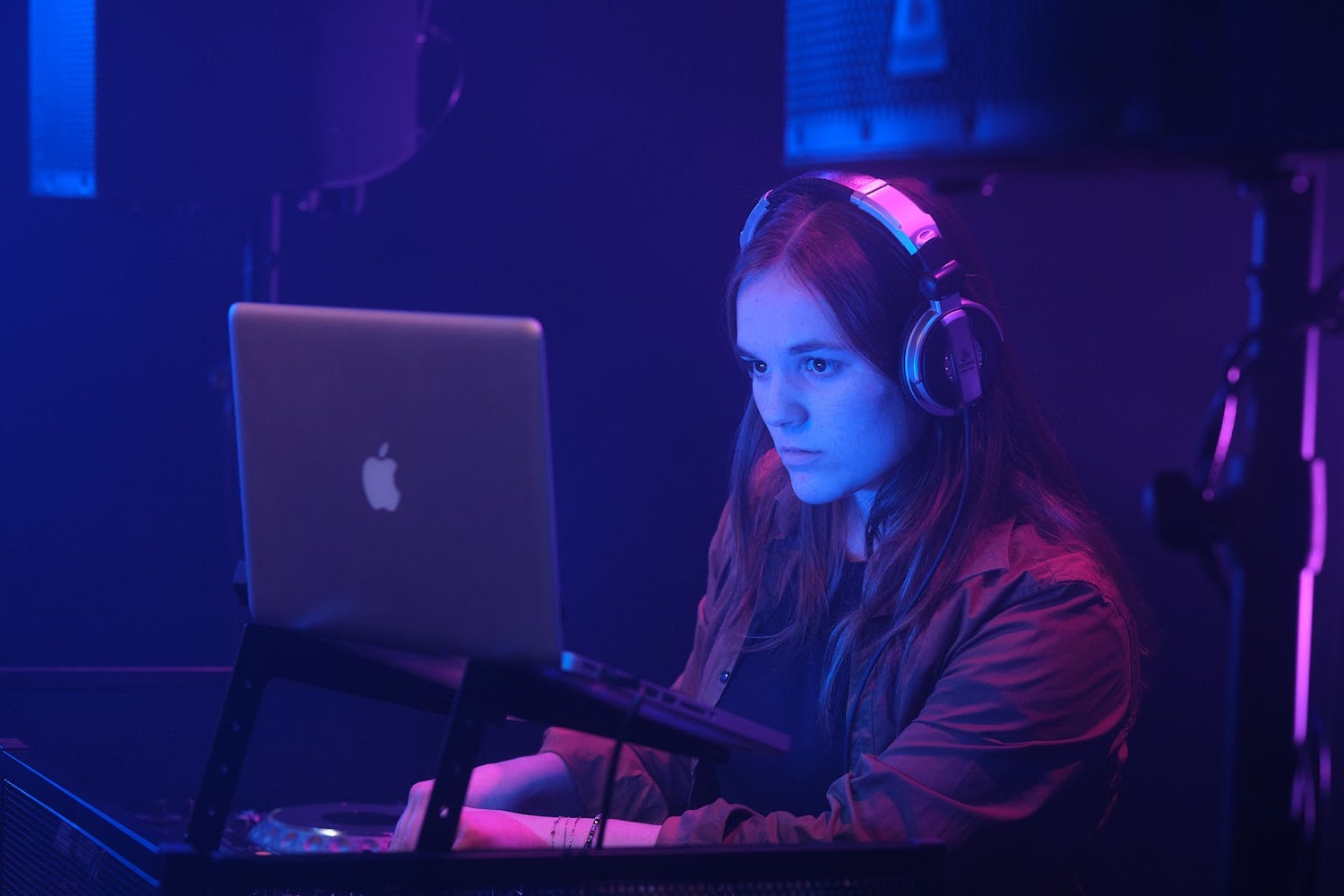
Nice, isn’t it? Dreaming about how tonight you can fully lose yourself in your DJ skills and get carried away by the music. But if you want to achieve that, you need to be sharp right now. You don’t want situations where you roll in your DJ setup and start building it while the guests are just sitting down for dinner. And it won’t be the first time the caterer plugs in a hotplate and—bang—the fuse blows. Where was the consumer unit again?
Rule #7. Your own golden rule
If you’ve already done gigs, we’d love to hear what you’ve learned. What’s your biggest DO and what’s your biggest DON’T? Let us know in the comments below.




No comments yet...