
-

To get straight to the point: if you don’t make music, you’re not really living. That may sound like a rather firm belief. But however you look at it, Guest blogger Iris Siemons, songwriter and singer, always seems to come back to that conclusion. Iris recommends starting with the most personal instrument there is—the one everyone carries with them: the voice. Singing is good for you!
-

Guest blogger Marlies, from music blog Letsgroef.nl, prefers listening to vinyl. She also listens to digital music via Spotify or on YouTube, but spinning records on an old-fashioned record player is still her favourite. That said, she’s not an audiophile and doesn’t get involved in those vinyl-versus-streaming debates or analogue-versus-digital discussions. For Marlies, the charm of LPs lies in completely different things.
-
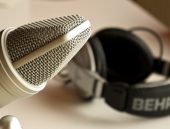
You’ve probably heard the term ‘podcast’ mentioned at some point over the past few years. In the United States, it’s been hugely popular for a long time, but in the UK it’s still a bit behind. That’s a shame, because it’s a fantastic medium that’s well on its way to replacing radio (and, to a lesser extent, TV). Guest blogger Dick Hoebée – from The Polarizer Podcast – explains what a podcast is, where you can find and download podcasts, and which ones you should absolutely give a listen!
-
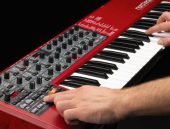
Virtual hybrid, er… what? Plenty of keyboard players and producers wonder what virtual-analogue and hybrid (i.e. analogue-digital) synthesisers are, and what the difference is. Guest blogger and studio expert Freek Roffel, from Freaky Studio, explains how these VA synthesisers and hybrid synths originally evolved from the ‘pure’ analogue synthesiser. And where does Freek’s preference actually lie: analogue, virtual analogue, or analogue-digital?
-

More and more stories are appearing in the media about music having a beneficial effect on people and supporting recovery. We probably all recognise how music can comfort you or lift your mood. That can be therapeutic, but it isn’t music therapy yet. Guest blogger Jaimie van der Snel, a music therapist, gives you a glimpse into the possibilities of music as therapy.
-

The previous blog by guest blogger Menno from Supa-Dupa Rental was about whether you should work with vinyl or digital as a ‘real’ DJ. But when are you actually a good DJ? You can ask ten DJs and get fifteen answers. In this blog, Menno shares his view on what makes a good DJ!
-
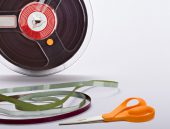
This is, in a nutshell, what people generally mean by sampling (or samplen in Dutch): re-using a fragment of someone else’s music in your own. That fragment could be a beat, a vocal line or an instrumental hook. In this blog, guest blogger and musician Jemy Gijsman from music school Let it Rock takes you through the history of sampling. And what about sampling and copyright?
-
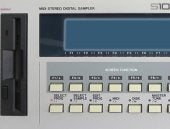
Guest blogger Freek Roffel from Freaky Studio takes you through his second blog about sound synthesis. Or the lack of it. To understand what a rompler is, we’ll take a deep dive into the history and discover that old techniques still shape today’s music. And what exactly is the difference between romplers and samplers?
-
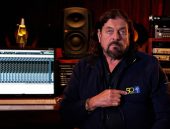
Guest blogger Freek Roffel from Freaky Studio is writing this time – instead of about gear with knobs – about the man who has been behind the knobs for a very long time: the famous producer Alan Parsons. A studio pioneer who’s been active for 50 years and can still count himself among the very best in the world. How did that happen? Freek explains!
-

Many people have the idea that a live DJ is just turning a few knobs and mostly holding their hands in the air. But is that really true? And if not, what does a DJ actually do on stage during a show? And why not just pre-programme a DJ set? Guest blogger Amar Amlani (DiceDJ) explains!
-
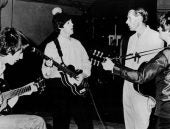
On his long and winding road past productions, studio gear and producers, guest blogger Freek Roffel of www.freaky.studio now writes about George Martin, known among other things for The Beatles. Here, he tries to answer the question of whether the Fab Four would have gone as far without the influence of this famous producer (who often preferred to stay in the background). And did Martin actually do anything particularly special after The Beatles?
-

As a musician, you’re of course familiar with staff notation or chord symbols. Two forms of music notation that make it possible to play songs straight from the page. But you may also have heard of a third form of notation: the Nashville Number System. Guest blogger and singer-songwriter Kevin Okkema explains exactly how it works.
About Bax Music
Bax Music is your go-to online music store in the UK with more than 48,000 bits of gear and accessories in stock. More than 1,000 brands and a 26,000m2 warehouse packed with musical instruments, DJ and studio gear, headphones, speakers and lighting. Ordered before 10 PM? Receive delivery in 2 - 4 business days.
Subjects
Sign up for the Bax Music Blog Update!
Just fill in your email address and we'll drop a fresh instalment of blogs in your mailbox every month so you never have to miss out again.