
-

Lots of audio interfaces and mixers have an input labelled Hi-Z, Inst or with a little guitar icon next to it. So what’s it for? In short: a Hi-Z input is designed for the high-impedance signal of an electric guitar or bass, so it comes through clear and bright when you plug straight in. Plug your guitar in anywhere else and you’ll hear the difference straight away.
-

Dreadnought or jumbo: if you’re looking for a large acoustic guitar, you’ll end up choosing between these two sooner or later. Both are big and loud, with a hefty helping of bass. Yet the choice is less tricky than it seems: the dreadnought is the versatile standard, while the jumbo is a size bigger still and asks more of your body. Your arms and your ears will decide together which one it’ll be.
-

Mic in hand and off you go. How hard can it be? Yet you can instantly hear the difference between a singer who understands their microphone and one who’s just holding it. Good microphone technique on stage comes down to two things: where you point the microphone and how close you are to it. Master those two and you’ll sound fuller, and feedback will get less of a look-in.
-

DMX is the language your lighting desk uses to talk to your lights. With this protocol, you can control lights and effects from different manufacturers from a single controller, which is why you’ll come across it sooner or later once you start working with lighting. If you understand how DMX works, you’ll build a light show faster and spend less time hunting for that one light that just won’t respond.
-

RCA, cinch, phono: you’ll see these names used interchangeably, but they all refer to the same plug with a single pin in the centre and a ring around it. Simple enough, right? Until you need an adapter or want to go digital. In short, RCA is a simple, unbalanced connection carrying one signal per plug, and almost everything you need to know follows from that.
No responses | in: Cables -

Left-handed and learning to play the guitar? Then sooner or later you’ll run into the question: do I buy a left-handed guitar, or do I just learn to play right-handed? Around one in ten people are left-handed, so you’re certainly not the only one wondering about this. My answer: there’s no wrong side, as long as you choose what feels natural to you and don’t switch afterwards.
-

The colour of a guitar has no effect on its sound, and the finish has only a slight one at most. That difference is so small and so disputed that you’re better off choosing on looks, feel and how the guitar ages, especially with an electric guitar. Even so, the debate between nitro and poly fans has raged on for decades. There’s a grain of truth in it, just not where you’d expect.
-

The Arturia KeyStep isn’t a keyboard with built-in sounds, but a MIDI controller that you connect to your computer, synthesizer or modular gear. The original appeared around 2016, and it was an instant hit: affordable keyboards with both MIDI and CV output were scarce at the time. Since then, the range has grown with new models and MK2 versions. So what do you choose: KeyStep or KeyStep 37? MK1 or MK2? What’s the difference with the -Lab series and the BeatStep? Let’s take a look.
-
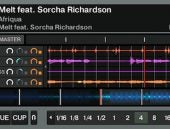
Stems – this music format from Native Instruments is sometimes called ‘the future of DJing’. Especially at launch, three years ago now. Still, our DJ and studio expert Marc van den Hurk gets the feeling the concept hasn’t quite broken through. A shame, he thinks, because it has so many possibilities! But is that really the case? And does it actually have a future? Marc takes you into the world of Stems!
-
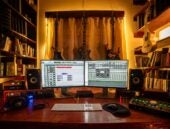
You open a laptop, click a button and start recording a track. That sounds like the most natural thing in the world, but behind that simple action lies fifty years of technological leaps. How did digital recording and MIDI come together in the device now sitting on your desk? This is the story of two developments that began separately and eventually became completely intertwined.
-

You want to learn to DJ, you’ve got a budget, and you’re facing that first real decision: a controller that connects to your laptop, or a standalone system that plays the music by itself. Both options work perfectly well, but they suit different situations and different ways of working. Here are the key differences to help you make your choice.
No responses | in: DJ -

Saxophone or clarinet: both instruments use a reed and belong to the woodwind family, but they sound different, feel different and suit different musical styles. If you’re not sure which way to go, it helps to set out the main differences side by side. That way you can make a choice that suits you.
No responses | in: Musician
About Bax Music
Bax Music is your go-to online music store in the UK with more than 48,000 bits of gear and accessories in stock. More than 1,000 brands and a 26,000m2 warehouse packed with musical instruments, DJ and studio gear, headphones, speakers and lighting. Ordered before 10 PM? Receive delivery in 2 - 4 business days.
Subjects
Sign up for the Bax Music Blog Update!
Just fill in your email address and we'll drop a fresh instalment of blogs in your mailbox every month so you never have to miss out again.