
Guitarist
-

An acoustic guitar amp or a small PA: as a singer-songwriter, you’ll run into that question as soon as the living-room gig becomes a pub gig. For a long time I played with a combo on a bar stool behind me, and later I had a column PA in the boot. In short: the combo wins as long as you’re on your own in a small venue, and the PA wins as soon as there’s more going on on stage.
-

A volume pedal and the volume knob on your guitar basically do the same job: they take your signal from silent to full. So why spend money on a pedal? The difference lies in how you control them and where they sit in your signal chain. Your foot simply works differently from your little finger, and you can put a pedal wherever you like.
-

Playing guitar and blowing harmonica at the same time: Bob Dylan did it, Neil Young still does, and I’ve been doing it myself for years with varying degrees of success. The secret isn’t a third arm, but a sturdy, well-adjusted harmonica holder plus a harmonica in the right key. The rest is practice (and the odd bum note, but that’s all part of it).
-
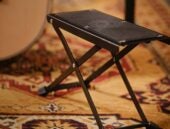
A guitar footstool is a small, height-adjustable stool that you place under your left foot. Classical guitarists in particular swear by it, and not without reason. By raising your left leg slightly, the guitar rests on your left thigh and the neck naturally sits higher, without you having to sit at an angle or let one shoulder drop.
-
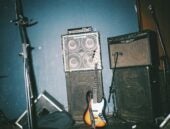
Can you play a bass guitar through a guitar amp? I get asked that just about every time someone has bought their first bass and has an old guitar combo sitting in the corner. The short answer: at low volume it’s perfectly fine, but crank it up and you’re gambling with your speaker’s lifespan. The other way round, guitar through a bass amp, is pretty much always fine.
-

Starting out on electric guitar or bass guitar? At first glance they look like family: four or six strings, a neck with frets, an amp behind them. But in a band, they do something completely different. ‘Which instrument is the easiest to start on?’ isn’t really the right question, because guitar and bass both have their own technical challenges. The real question is simpler than you think: what do you think is cool?
-
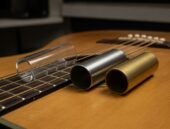
A guitar slide might look like a simple tube, but its material says a lot about how it behaves. Glass, steel and brass differ mainly in weight and character. How heavily does it sit on the strings, how bright does it sound and how quickly can you move it? Choose the slide that suits your strings and your playing style, not the material with the prettiest shine.
-
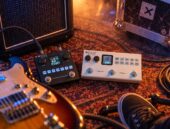
The Fazley Core-FX series consists of two multi-effects pedals for guitar and bass: the compact Core-FX2 and the more extensive Core-FX3. Both pack amp models, effects, NAM captures, a USB audio interface and a rechargeable battery into one small box. The main differences are how many sounds you get and whether you want to use the pedal on stage.
-
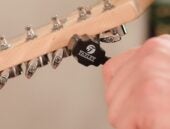
A string winder: is it a genuine tool, or just a toy for guitarists who can’t be bothered to turn the pegs? Honest answer: you can get by perfectly well without one. But it saves so much winding and costs so little that you’d be daft to leave it on the shelf. In short: is it a luxury? Yes. Unnecessary? No.
-

Marshall is arguably the best-known amplifier brand in the world, and that’s no coincidence. A drummer with a music shop listened carefully to what guitarists were missing, and the answer, more volume and a rawer edge, became the sound of rock. It started with a handful of prototypes built outside the shop and ended up as a wall of cabinets on every major stage.
-
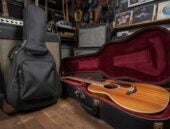
Gig bag or guitar case? Every guitarist faces that question at some point, usually the first time you head out the door with your instrument. A case offers better protection, while a bag is lighter and more practical. Which one you need mainly depends on where your guitar is going and what it goes through along the way.
-
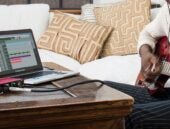
Lots of audio interfaces and mixers have an input labelled Hi-Z, Inst or with a little guitar icon next to it. So what’s it for? In short: a Hi-Z input is designed for the high-impedance signal of an electric guitar or bass, so it comes through clear and bright when you plug straight in. Plug your guitar in anywhere else and you’ll hear the difference straight away.