
-

The hi-hat is the piece of hardware on your drum kit that moves the most, which also makes it the piece where things go wrong most often. A clutch that won’t grip, a bottom cymbal lying dead flat or a spring that fights against you: you’ll hear it in your sound. Once you understand how a hi-hat stand is put together, you can have it dialled in within a few minutes.
-

How many keys you need doesn’t depend on how good you are, but on what you want to do with them. A producer recording basslines will get by fine with a couple of octaves, whereas someone learning the piano will hit a wall within a few months. In between lies a whole range of options, and each size suits its own kind of musician.
-

Starting out on electric guitar or bass guitar? At first glance they look like family: four or six strings, a neck with frets, an amp behind them. But in a band, they do something completely different. ‘Which instrument is the easiest to start on?’ isn’t really the right question, because guitar and bass both have their own technical challenges. The real question is simpler than you think: what do you think is cool?
-

Studio monitors in the living room: is that allowed? I regularly get this question from friends who are torn between a set of active monitors and a pair of bookshelf speakers. My answer: it can work perfectly well, as long as you understand that a monitor is designed to be honest and a hi-fi speaker is designed to sound beautiful, and that you need to be the kind of listener who suits that. The rest comes down to setup, budget and taste.
-
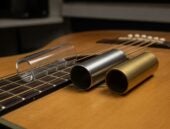
A guitar slide might look like a simple tube, but its material says a lot about how it behaves. Glass, steel and brass differ mainly in weight and character. How heavily does it sit on the strings, how bright does it sound and how quickly can you move it? Choose the slide that suits your strings and your playing style, not the material with the prettiest shine.
-

A trumpet mouthpiece carries a code such as 7C, 5C or 1½C. These ‘Bach codes’ aren’t a ranking from beginner to master. They’re a sizing system that tells you how wide and how deep the cup is, and therefore how the mouthpiece sounds and plays. In this article, we’ll help you decipher the code.
No responses | in: Musician -
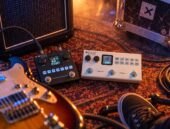
The Fazley Core-FX series consists of two multi-effects pedals for guitar and bass: the compact Core-FX2 and the more extensive Core-FX3. Both pack amp models, effects, NAM captures, a USB audio interface and a rechargeable battery into one small box. The main differences are how many sounds you get and whether you want to use the pedal on stage.
-

The right hand on its own goes fine. Now the left-hand part: also fine. Great, time to put them together. And that’s the moment everything gets tangled up. This isn’t a personal failing; it’s the stumbling block for almost every beginner pianist. Playing with two hands at once is a skill you have to train separately, and you do that by making the problem smaller and smaller until it works. Time to start cutting.
-
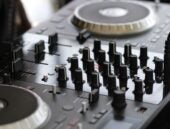
Two or four channels: that’s the question I spent the longest mulling over when I bought my first proper DJ setup. I went for four, because more seemed better. After a year of playing, I’d barely touched channels 3 and 4. For most DJs, two channels are plenty, and upgrading only pays off if you’re regularly running more than two sources at once.
No responses | in: DJ -
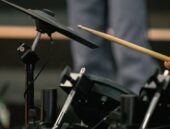
A crash that sounds when you hit the floor tom, a kick that plays twice or a hi-hat that stays open while your foot is on the pedal: trigger problems are infuriating, but you can almost always fix them with a few settings in your electronic drum kit’s module. You just need to know which setting to change and, above all, by how much.
-

For me, battery-powered pars are the best invention in mobile lighting in recent years. The same goes for wireless DMX. And when a light has both, even better. I’ve rolled out more cables in my life than I care to remember, and usually coiled them back up long after the bride and groom had gone to bed. These days, you put the light down, pair it with the transmitter and walk away. You then pick the colour from your controller without taking a single step towards the light.
-
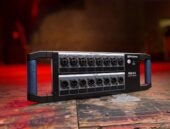
Audio over a network cable. When I first read about it, I thought: great for the big boys with a lorry full of flight cases, but not for me. I know better now. An audio network like Dante swaps that back-breaking multicore for the same little cable that sits behind your router, and that’s simply a smart move, even for a pub band or a village church.
About Bax Music
Bax Music is your go-to online music store in the UK with more than 48,000 bits of gear and accessories in stock. More than 1,000 brands and a 26,000m2 warehouse packed with musical instruments, DJ and studio gear, headphones, speakers and lighting. Ordered before 10 PM? Receive delivery in 2 - 4 business days.
Subjects
Sign up for the Bax Music Blog Update!
Just fill in your email address and we'll drop a fresh instalment of blogs in your mailbox every month so you never have to miss out again.