
Musician
-
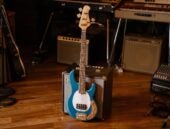
A short scale bass guitar has a scale length of around 30 inches instead of the usual 34 or 35 inches, and that makes more of a difference than you might think. For years, a short neck was dismissed as a kids’ bass or an entry-level model, but if you’d rather stretch less, want to spare your shoulder or are coming over from guitar, you’re often better off with one. High time that image got an update.
-
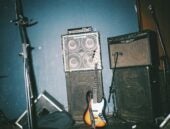
Can you play a bass guitar through a guitar amp? I get asked that just about every time someone has bought their first bass and has an old guitar combo sitting in the corner. The short answer: at low volume it’s perfectly fine, but crank it up and you’re gambling with your speaker’s lifespan. The other way round, guitar through a bass amp, is pretty much always fine.
-

Cleaning a flute isn’t difficult, but you can do a surprising amount of damage along the way. A good share of the harm done to flutes doesn’t come from playing, but from well-intentioned polishing. What your instrument needs is simple: dry it on the inside after every session, use nothing but a soft cloth on the outside, and once a year, let someone who really knows what they’re doing look it over.
No responses | in: Musician -
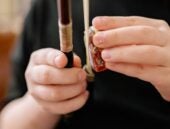
Rosining is the most underestimated job for string players, and the one that most often goes wrong. With students I see the same thing almost every time: far too much rosin, far too often, and a violin that sounds as if there’s sand between the strings. A bow needs less rosin than you think, but at the right moment and of the right kind.
No responses | in: Musician -

Lyrics first or music first? Every beginner songwriter asks an experienced colleague that question at some point. The answer is usually a let-down: it doesn’t matter where you start, as long as you start, because a song only gets finished in the back-and-forth between words and notes. Still, every starting point has its own pitfalls.
-

For years I sang with a cable attached to my microphone and never gave a wireless mic a second thought. Until the guitarist in my band suddenly turned up to rehearsal without a cable. I thought: if he can do it, so can I. Still, there’s plenty to be said for a wired connection. Let’s look at the pros and cons.
-
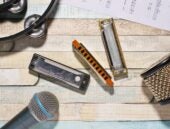
My first harmonica was a C. Not because I’d given it much thought, but because I was told in the shop that everyone starts with one. The shop assistant was right. Your first ‘harp’ is a C. You only buy each subsequent key once a song or a band calls for it.
No responses | in: Musician -

A new saxophone mouthpiece is the cheapest way to become a different saxophonist, and also the easiest way to throw money away. Tip opening, chamber and baffle each do something different to your sound, and the material does less than you might think.
No responses | in: Musician -

Cajón or djembe: the two most popular hand drums, yet very different beasts. One is a wooden box, the other a hollowed-out tree trunk with a skin stretched over it. Which one works best for a band, a campfire or lessons? I own both a djembe and a cajón myself and use each for different purposes.
-

A microphone stand is a simple thing: a tube on a base, with a clip at the top. But hang a tablet holder, extra arm or cup holder on it and it becomes a multifunctional piece of kit.
-

The hi-hat is the piece of hardware on your drum kit that moves the most, which also makes it the piece where things go wrong most often. A clutch that won’t grip, a bottom cymbal lying dead flat or a spring that fights against you: you’ll hear it in your sound. Once you understand how a hi-hat stand is put together, you can have it dialled in within a few minutes.
-

How many keys you need doesn’t depend on how good you are, but on what you want to do with them. A producer recording basslines will get by fine with a couple of octaves, whereas someone learning the piano will hit a wall within a few months. In between lies a whole range of options, and each size suits its own kind of musician.