
What Are the Best Brushes for Me? |
|
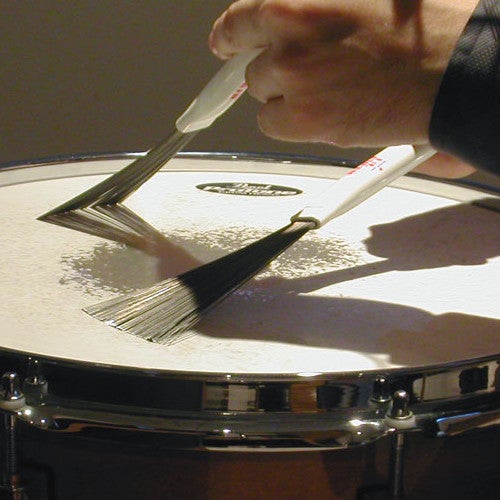
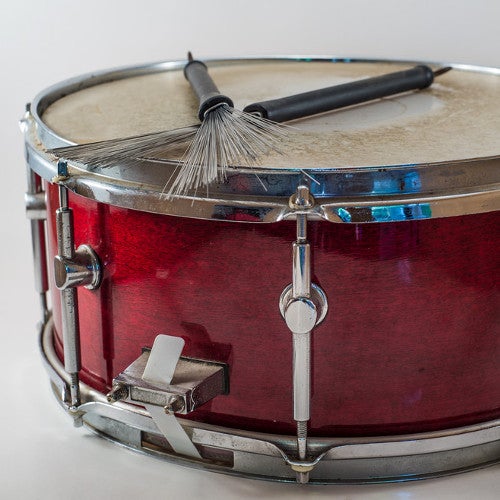
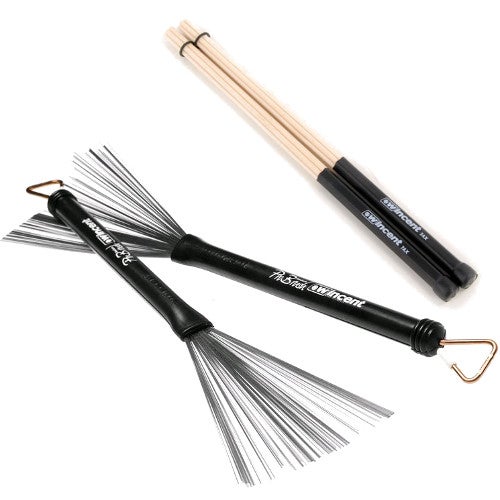
Playing with a pair of brushes instead of sticks comes with a different technique as well as sound. So, are brushes for you? And since brushes can come in various shapes and sizes, which ones do you need? In this Guide, we offer the answers to your most frequently asked questions about drum brushes. If you have a question and can’t find the answer here, feel free to contact us! 1. What Are Brushes?Designed for drummers, brushes can be used to play the drums instead of sticks. In place of a hard tip, drum brushes are literally narrow, long brushes fitted with stick-like handles. Brushes are not only used to play drums more softly and at a lower volume, but support the much-loved sweeping playing techniques made famous by legendary jazz drummers. Brushes are also used in a variety of different genres, and there are specially made brushes for the cajon. » Brushes
2. What Drumheads Can I Play With Brushes?You’ll get the best possible effect out of your brushes when playing coated drumheads. Since coated drumheads have some texture to them, the strands of the brush have something to rub against to produce that distinct ‘sweeping’ sound. Of course, you can also play uncoated drumheads with brushes, but since they’re a lot smoother, the effect won’t be so prominent. Drumheads that mimic traditional calf-skin are more likely to create a good brush-sound.
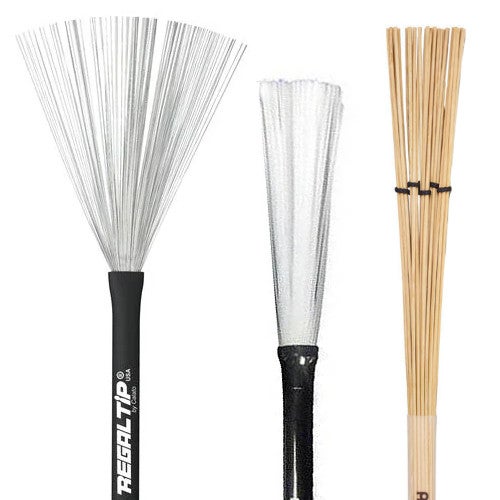
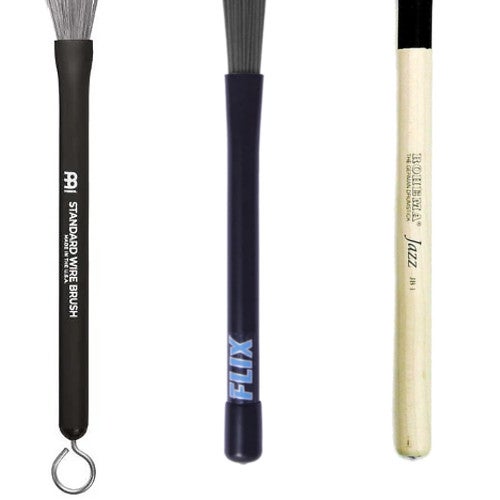
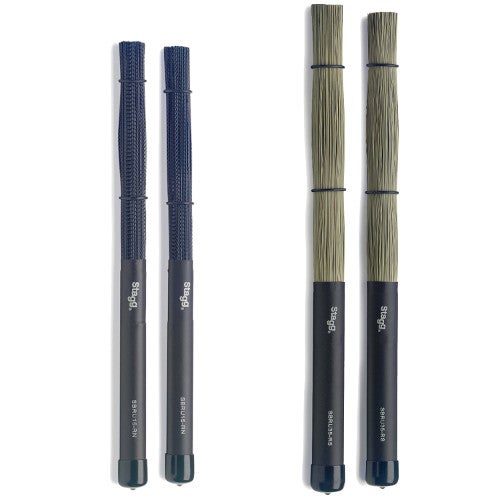
3. What’s the Difference Between Metal, Plastic, and Wooden Brushes?Metal brushes are quieter than plastic brushes. If you want your brushes to really ‘whisper’ against the drumhead of your snare drum, then metal brushes are recommended. The biggest difference is heard when you strike the cymbals, since metal brushes produce a more traditional sound. The downside of using metal brushes is that they can get bent over time.
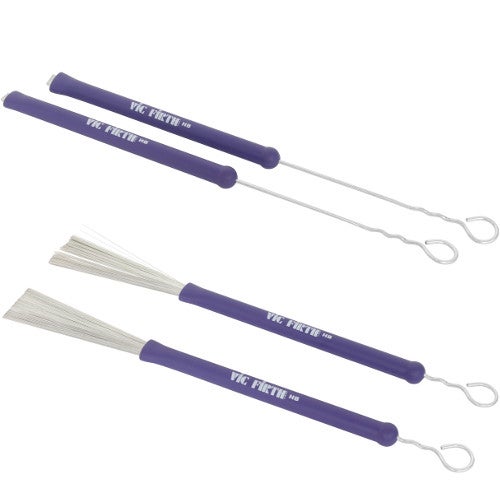
4. Why Use Retractable Brushes?Retractable brushes can be slotted back into the handle, keeping them safe when packed away. Another advantage of using retractable brushes is that you’re often able to set the spread of the brush. By extending the brush all the way out, you get that authentic brush sound and by pushing the brush back inside the handle by increments, you get a tighter, sharper sound. The downside of using retractable brushes is that pushing them in, and pulling them out repeatedly can damage them over time. You could just use a pair of ‘fixed’ brushes that can’t be retracted, but here you run the risk of them getting damaged in your kit bag when you pack them away. In any case, the sound of one set of brushes can’t be said to be better than the other.
5. What’s the Difference Between Brushes and Rods?While both rods and brushes have bristles, brushes can be spread wider while rods are ‘bundled’. As such, rods have a sound that comes closer to that of normal drumsticks, but are quieter and have less attack. Brushes are even quieter than rods and are especially good at ‘sweeping’. Because of their shape and the sound they produce, rods can be seen as a kind of middle-ground between drumsticks and brushes. If you’re just looking for something that’s a little quieter than drumsticks, then the best choice would be a pair of rods.
6. What Difference Does the Kind of Brush Handle Make?A brush handle can be made of wood, rubber, or plastic. While the material the handle is made of has no effect on the sound, it makes a big difference when it comes to the playing feel. A wooden handle offers the same feel as a drumstick, and you’ll often find that retractable brushes have rubber or plastic handles. Rubber has more grip, while plastic handles have a smoother feel. One isn’t necessarily better than the other, since it all depends on what you prefer to play with. » Brushes with Rubber Handles
7. How Long Should My Brushes Be?Brushes don’t actually vary all that much in terms of length, so there are few guidelines for choosing the ‘right’ length. What we can say is that longer brushes tend to be easier to flip so you can use the butt of the handle for effects. » Brushes
8. Can I Use Drumstick Techniques To Play with Brushes?The difference between the wide spread of brushes and the tips of drumsticks is so big that you can’t use the same technique to play with both. Drum brush playing techniques revolve around sweeping the brush across the drumhead. You can find plenty of books that explain the techniques and offer exercises, but you can also find more than enough drum brush tutorials online.
Links & More InformationProduct Categories» Brushes Blogs & Buyer’s Guides» Drum Dampening Gear Buyer's Guide
|